Back to the mothership
How raising children transnationally strengthens intergenerational bonds.
by Sarah Lin
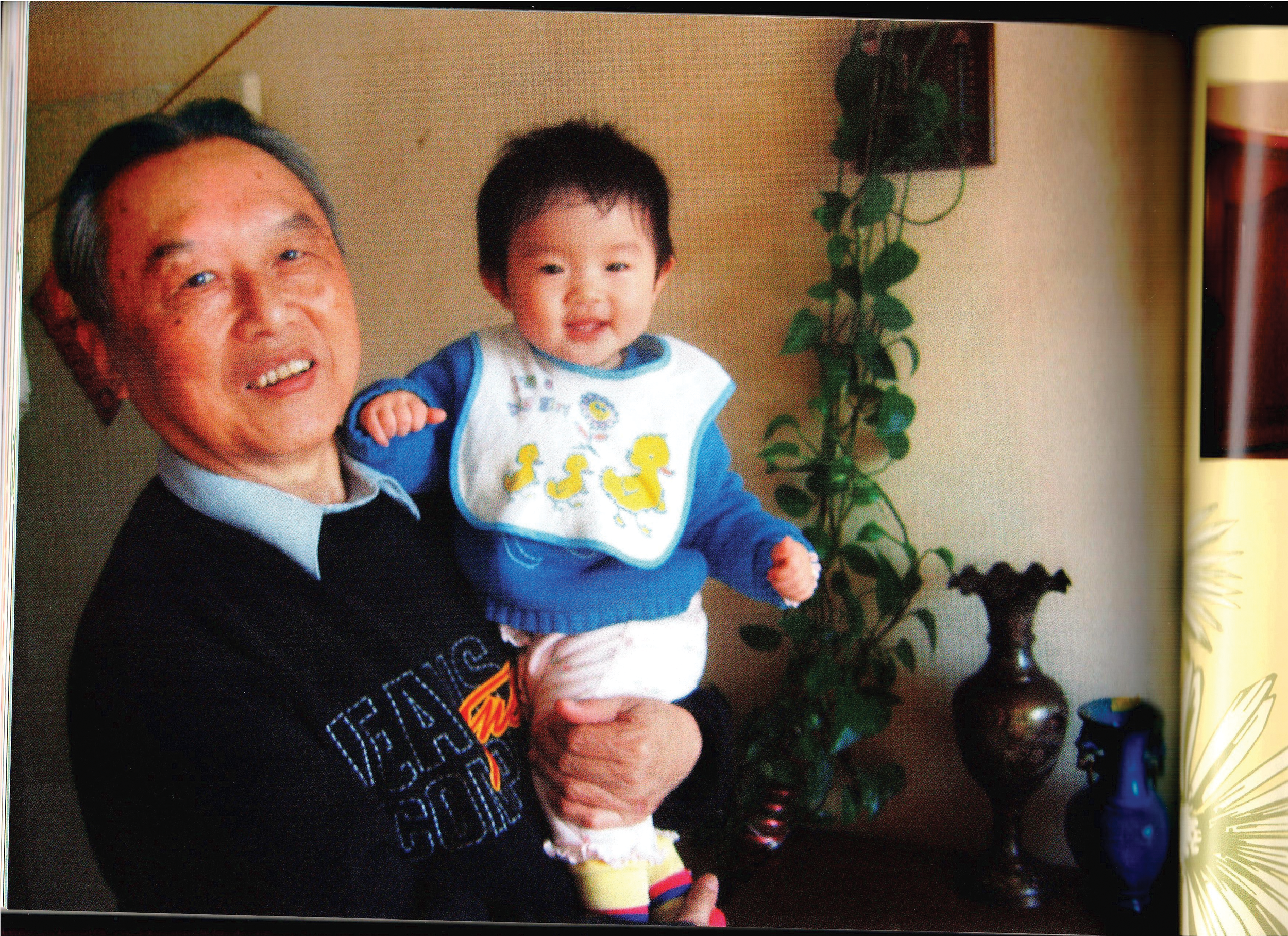

Photo courtesy of Sarah Lin
I often joke that when I was an infant, my parents shipped me off to China and abandoned me there. Honestly, it’s not so far from the truth.
From when I was 6 months to 3 years old, I was raised by my maternal grandparents in Beijing, where I spent my days waddling around the public square, playing with my live-in nanny and accumulating so many cavities that I set a record at the baby dentist’s office — 13, by the time I returned to America. At least, that’s what I’m told. I don’t remember any of it.
I am a satellite baby — an individual who, as an infant or young child, is sent transnationally to be raised by grandparents or relatives in a country of heritage, typically until the child starts grade school. According to the 2009 study by researchers Yvonne Bohr and Connie Tse that coined the term, these separations, especially prevalent in Chinese immigrant populations in North America, occur for a variety of reasons, including a lack of affordable or replacement childcare, the need for parents to work long hours, cultural tradition and more.
According to my mother, the choice to send me abroad was easy due to my parents’ evolving responsibilities with their careers, schooling and my older sister.
“[We were working] full-time, plus studying master’s [degrees] and taking care of Maggie, a 3-year-old,” she says. “The best way to take care of you as a little baby was to bring you back to China.”
My mother says the other options — enrolling me in American daycare or hiring a day nanny — were precarious. If I were in daycare with dozens of other snotty babies, she thought I could risk falling ill at a vulnerable young age. If she hired a day nanny, she couldn’t be certain that the nanny wouldn’t mistreat me. My grandparents couldn’t overstay their visitor visa. So, off to China I went.
Leslie Wang, former associate professor of Sociology at the University of Massachusetts Boston, says having grandparents or relatives raise children despite transnational separation is a “pragmatic” choice for many immigrant families.
“Childcare in the United States is not subsidized for the most part. [It is] very expensive. Immigrant parents also don’t necessarily know how to secure services like that for themselves,” Wang says. “Why would they trust strangers when their parents are retired and have a stable life in China?”
When I ask my mother whether she felt she was missing out on an important time in my life, she shakes her head vigorously.
“Every week we talked, and Grandma and Grandpa periodically always send pictures or videos about you. So, I feel very involved in your growth,” she says. “If you stay with me, I will send you to daycare during the day. I will know less about what you did.”
According to Xian Zhang, researcher at the Children & Families Across Cultures Coping with Trauma Research Lab at Boston University, satellite parenting differs greatly from the dominant nuclear family model in Western culture, where a household unit consists only of two parents and their children.
“For Chinese parents, I would think they would have this collective idea that parenting is not only the parents, it’s the grandparents, it’s the entire family, the relatives,” Zhang says. “So the decision to send children to China to be raised by grandparents, it doesn’t feel like the baby is away from the family.”
My time in China is only memorialized through the stories that my grandparents and parents tell.
But other satellite babies, including SESP fourth-year Jessica Sun, say they remember some to all of their time in China.
Sun’s parents sent her to live with her maternal grandparents in China twice: first when she was 20 months to 2 years old, and again when she was 5 to 6 years old. Each time, her father was in school and her mother was working part-time to support the family, constricting their ability to find adequate and cheap childcare in the United States.
Sun says she has fond memories of her second time in China, where she lived in rural Jiaohe in Jilin province. She says she remembers regularly playing outside with the neighborhood kids and occasionally with her cousins, who lived in the same area and are Chinese by nationality.
Sun even made a best friend at a daycare she attended, whom she remembers to this day.
“I don’t really know if those preschool years were special to him, but since they were special to me, I tried to find him last year when I was in China,” Sun says. “I did find him, but I didn’t contact him because I was scared; I don’t know if he remembers me.”
Sun says she is grateful she was able to build a relationship with her grandparents, as well as learn how to speak Mandarin Chinese through her year of schooling and living in Jiaohe, a skill she retains to this day to communicate with her mother and extended family.
“If I didn’t have any memories of the time I spent in China with them, I probably wouldn’t really be that close with them,” she says. “I’m really glad that I remember, and that it happened.”
SESP third-year Enson Pan lived in Fujian province with his paternal grandparents for nine months at the age of 4. Like Sun, he has many fond memories in China, and says his grandparents had the “most influential impact” on his early childhood. Pan was also able to retain fluency in Mandarin Chinese, something he says is uncommon among his other American-born Chinese friends.
“I’m really happy that it gave me a more dual outlook on life and my ability to communicate with family members and friends alike,” Pan says.
While Pan says most of his memories from that era were positive, he also recalls feeling “a bit resentful” about his father’s “spontaneous” visits to China during that time.
“My dad back then was my favorite person ever,” Pan says. “It wasn’t like he was telling me he was leaving or he was telling me he was coming, but I would have to wait for the next time I would see him.”
Zhang says explanatory conversations after reunification between parents and children are important to minimize the harms of what could be a painful transnational separation.
“The reassurance of love is what we found helped parents go through that difficult transition period,” she says. “The reassurance and the communication is what helps the most.”
My parents determined early on that I would return to the United States and enroll in preschool after spending around two to three years in China with my grandparents. But for my grandparents, who survived through the horrors of World War II, the years they spent raising my sister and I were “the happiest time” in their lives, my mother recounts.
“They were really trying to keep you there,” she says with a chuckle. “They told me, ‘Wei Wei [Sarah] can learn Chinese and never forget if you let her stay here through elementary school.’”
But my time in China had to come to a close. My grandparents and I flew back to America in May 2008, right before my third birthday. And as my grandparents had predicted, I did lose the majority of my Mandarin Chinese language skills over the following years. Currently, I speak at a more elementary level than even my 3-year-old self.
Back in the United States, I quickly adjusted to a new home environment, enrolled in a local, English-speaking preschool and even started picking fights with my sister, a glimpse of our childhood to come.
Ahead of their six-month visa expiring, my grandparents returned to China, marking the last time they would visit us in the United States. The afternoon they left, my mother says I frantically searched the house for them, despairing when I realized they were gone for good.
“You were sitting on the staircase and start crying like crazy, because for the three year you see them everyday,” she says.
Zhang says that transnational separations often overlook the emotional toll on children who part from the relatives who looked after them.
“We tend to forget that the children are separated from the grandparents who had raised them for three, four, five years,” she says. “Returning to the U.S. is another big, painful separation experience for the children.”
Despite difficulties, my mother says she believes the way my sister and I were raised, as satellite babies, was the “perfect solution.”
“One, [my parents] were really wanting and willing to support me, and two, had the ability to support all of this,” she says. “I feel very lucky. I don’t have anything [I] regret. I think it was the best choice.”
This past summer, my sister and I traveled to Beijing to visit my grandpa, five years after the last time I returned. My grandma passed away in 2022, at a time when COVID-19 regulations were still stringent in China. Only my mother made it to her funeral.
My grandpa now lives in a retirement community in Beijing’s suburbs. It’s quiet and idyllic, so different from the loud, busy, concrete jungle in the middle of the city where we used to live.
One morning, my sister and I sat around an antique coffee table in his new apartment, begging him to visit my grandma’s grave with us. But like the strong-willed and stubborn rooster of his zodiac sign, he refused and refused and refused. It was raining that day; he didn’t believe in spirits; his bones were old and weary.
“Don’t think it’s because I don’t love her,” he told us. “I was married to her for 50 years — of course I care for her!”
“But,” he said, with the widest grin. “She loved you two the most. You two were the most special in her heart.”
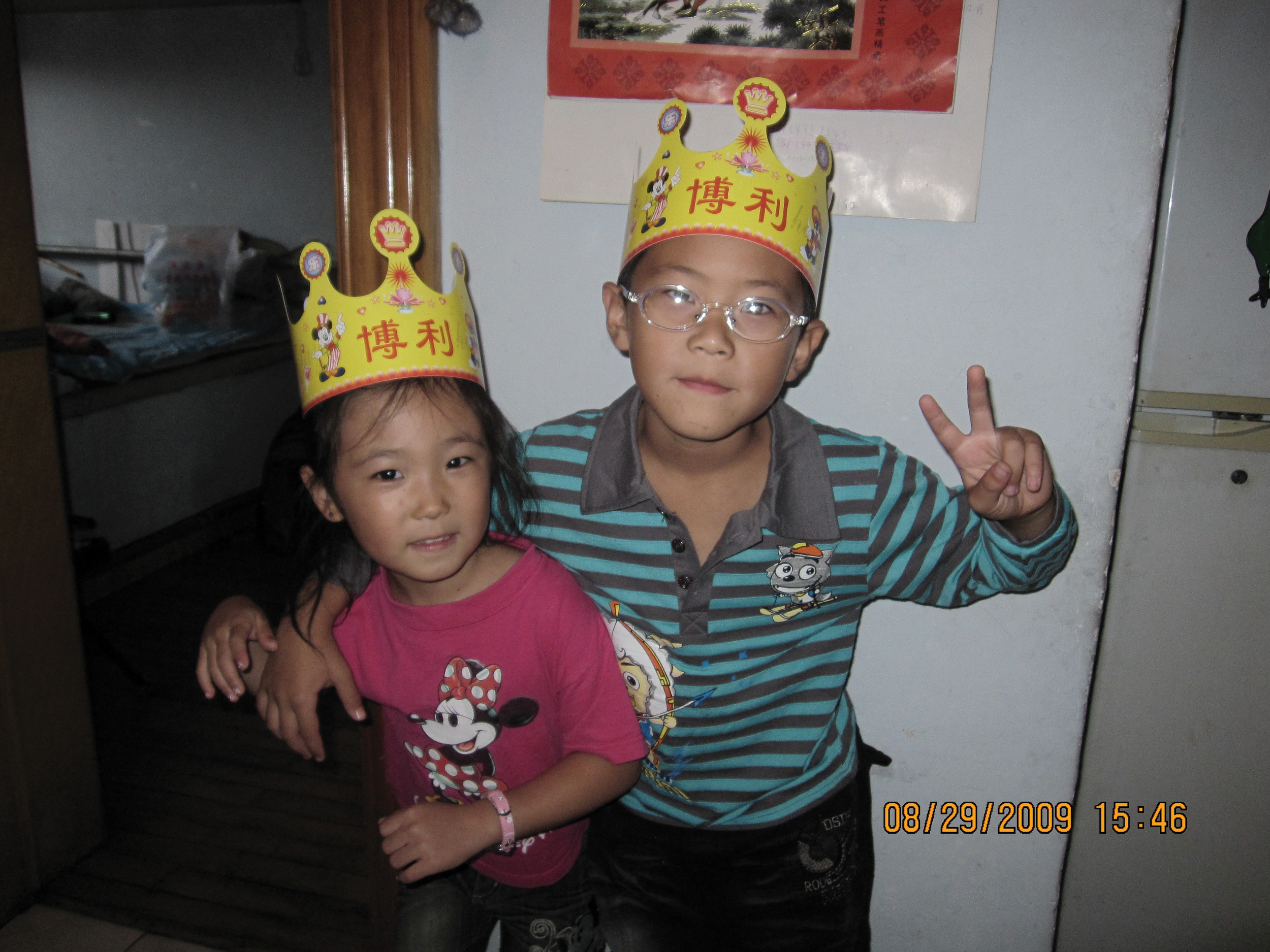
Photo courtesy of Jessica Sun