




(youth)
What happens when you long for a past that isn’t your own?
STORY BY YUJIN TATAR
DESIGN BY JOANNE CHOI


(first love)


My mom has told me many stories about growing up in South Korea. Her home in Yeonhui-dong, Seoul, was heated by yeon-tan, charcoal briquettes. Yeon-tan helped families stay warm during the bitter cold of Korean winters, but could also leak carbon monoxide in the middle of the night and kill you in your sleep.
“You know, I’ve almost died from carbon monoxide poisoning multiple times,” my mom says. Her father would would wake the family at the crack of dawn when he smelled something in the air, she recalls. He would drag them out of bed and make them drink vinegar to neutralize the carbon monoxide they inhaled — a now-debunked folk remedy.
Like many of my mom’s stories, I thought it was an exaggeration until I watched the main character of the hit K-drama Reply 1988 crawl out of her room, barely conscious, after inhaling the toxic gas in her sleep.
Reply 1988 tells the coming-of-age story of Deoksun and her friends as they experience the ups and downs of first loves, friendships and familial tensions in a rapidly-evolving Korea. Many viewers have developed a special connection to the show’s nostalgia, from the generations who lived through that era to the ones who live vicariously through them.
The first time I encountered this show was at a friend’s house, where her parents were watching it. My first impression was how silly the characters looked with their long, out-of-fashion clothes and hairstyles.
I remember my friend’s parents laughing at a scene I didn’t understand, saying, “That was chung-choon (youth)!” I always wondered why adults seemed to find comfort in reminiscing about the past.
It wasn’t until college that I started watching the show myself, when I was feeling homesick and trying to hold onto any threads of Korea that I could find.
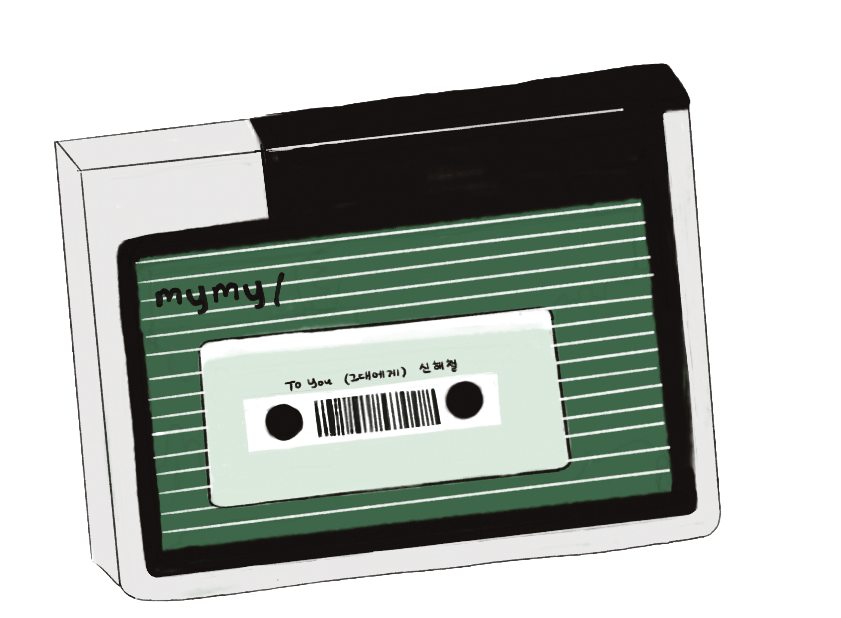
The scenes somehow felt familiar. I recognized bits and pieces of the ‘80s from my mom’s stories: students in identical bobs and bowl cuts due to hair-length regulations at school, studying while listening to the radio every night. I finally got to see a legendary moment my mom had described to me: when Shin Hae-chul performed his song, “To You,” at the 1988 MBC Campus Music Festival, a Korean college music competition.
“No one had heard anything like that before,” my mom says. The song shocked viewers watching live on TV, cementing its iconic status in Korea.
I intently watched every episode of Reply 1988, feeling as though each one brought me closer to my mom and craving details about her youth that I hadn’t given attention to before. As I became more invested, I wished to be transported back in time to my mom’s chung-choon.
I don’t think I was the target audience for the show, as it evokes memories that are not my own. But maybe the nostalgia I feel isn’t for myself, but for my mom’s youth. I long for the times she karaoked Kim Kwang-seok and Lee Moon-sae songs with her friends all night, or went dancing at discotheques and came home to a stern father waiting for her.
Before she was my mom, she was a young woman, like me. Maybe I am nostalgic for a time when she was carefree; when she had her own parents to rely on, before she became the one staying up until we came home. She now watches her own children grow up in an entirely different world. This can make it difficult for us to get on each other’s wavelength. But maybe, because watching Reply 1988 made me ask about her life, I am one step closer to understanding her.
As I walk through Yeonhui-dong, I look down at the pavement, wondering if I am stepping on the same gravel that my mom walked on when she was my age. I look at the houses, trying to guess which one she grew up in.
“It had gray bricks and a dark blue roof, with a yard where the dog would sleep,” she later tells me. I wonder if that house is still here, or if it’s long gone, swept away by the unforgiving force of time.
We, too, are currently living through our own chung-choon that will one day become the simpler times we miss.
As Deoksun says in the last episode of Reply 1988, “Time will always flow. Everything will pass by. That might be why youth is beautiful. It shines, blindingly bright, for just an instant. But you can never go back to it.”


(karaoke)