Etched in ink
Unveiling cultural tapestry on skin.
by Kerrin Cha
Tattoos have a wide variety of cultural connotations across Asia and the Pacific. In the Philippines, tribal tattoos are deeply embedded into Indigenous culture and are prevalently used for tribal identification, charms of protection and aesthetic. In much of East Asia, however, tattoos are socially taboo. In Japan, for instance, people cannot enter hot springs with their tattoos exposed. In South Korea, it is illegal for tattoo artists to practice without a medical license.
For Asian Americans, tattoos vary in meaning from an aesthetic cultural connection to a deliberate choice of rebellion. Take a look at how these Northwestern students choose to etch their Asian heritage into their skin and the unique identities they claim for themselves.
Ejean Kuo
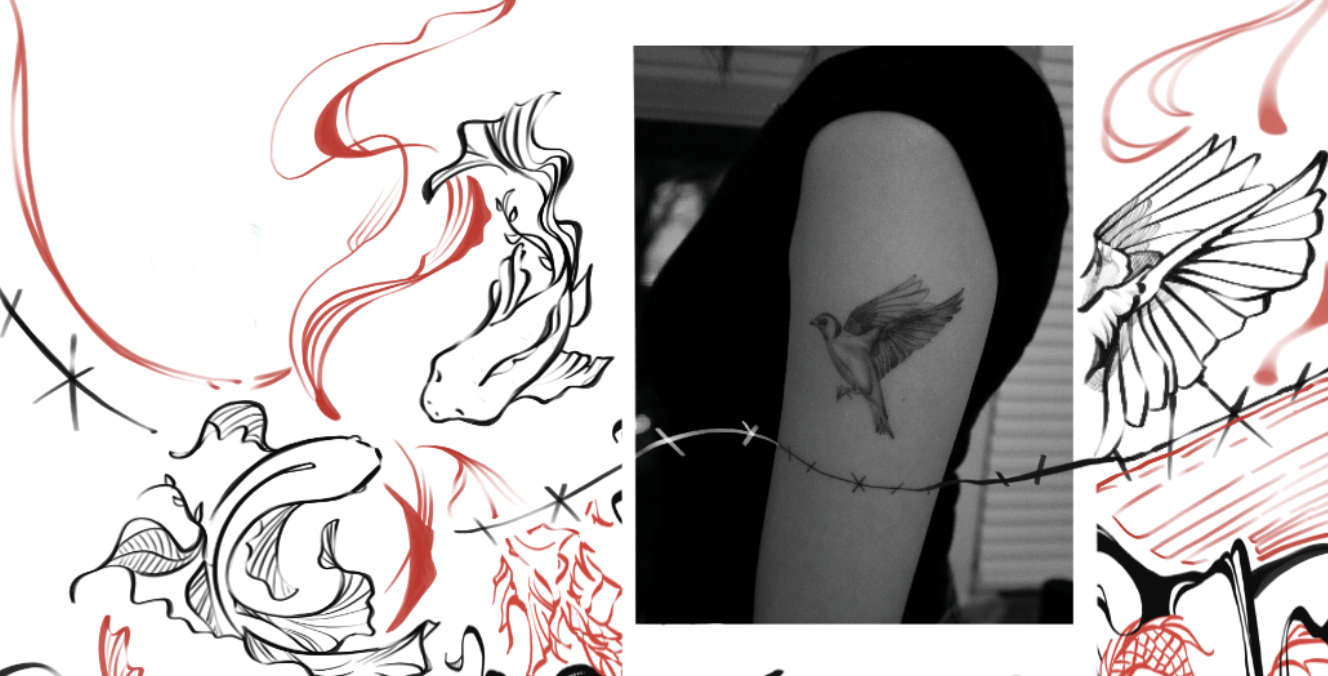
SESP first-year Ejean Kuo’s tattoos stand as testaments to her journey of self-expression. Her left bicep sports a goldfinch in flight above a barbed band, representing her favorite book, The Goldfinch. Growing up in a Christian Chinese household where tattoos were considered inappropriate, she never would’ve expected to get one. However, she says she felt the restrictiveness and despair that many teenagers experienced when COVID-19 hit. She decided to get a tattoo on her 18th birthday.
“Being able to make [my] own decision was kind of liberating,” she says.
Kuo’s tattoos are a point of contention between her and her parents. “My mom didn’t talk to me for a couple of days,” Kuo says. “I really don’t care that much what their expectations are for my own body and my self-expression.”
Aidan Ocampo
Weinberg fourth-year Aidan Ocampo says he views his tattoo journey as a means of dismantling colonialism. External co-president of Kaibigan, the Philippine-American student association on campus, Ocampo’s tattoo journey is a reflection of how he has rediscovered his Filipino heritage.
“I wanted to get something that definitely was intrinsic about myself,” Ocampo says.
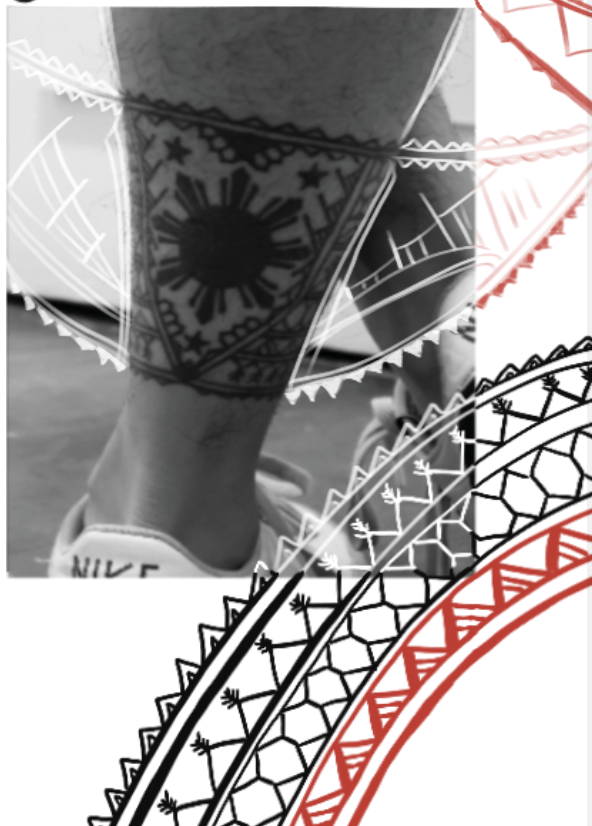
That’s why he got the stars and sun from the Filipino flag with batok bands wrapped around them tattooed on his back calf.
Ocampo’s tattoos reflect his national pride and are statements toward the Filipino decolonial movement. After coming to Northwestern, he connected with activists engaged in the movement.
The Philippines’ history with traditional art and methods of tattooing was mostly lost under Spanish rule. Today, many Filipino Americans strive to revive the art to reclaim their cultural history.
Ocampo says these tribal tattoos are unique to certain regions in the Philippines. He continues educating himself and voicing the need for cultural reclamation and decolonization. In the future, he hopes to receive a traditional tribal sleeve on his arm.
“For Filipinos, getting a traditional Filipino tattoo is an action of decolonization, which is really powerful,” he says. “I hope to see more people get more tattoos.”
James Kim
Weinberg fourth-year James Kim got one of his tattoos as a celebration of growth in his mental health journey. As a Korean American Christian, he grew up with two cultural narratives that emphasized placing others before yourself — the Korean emphasis on familial community and the Christian values of serving. But after starting therapy in his second year of college, James began to recognize the importance of self-care.
“I realized it’s not completely about depriving yourself, it’s about nurturing yourself, taking care of yourself in the way you take care of others,” Kim says.
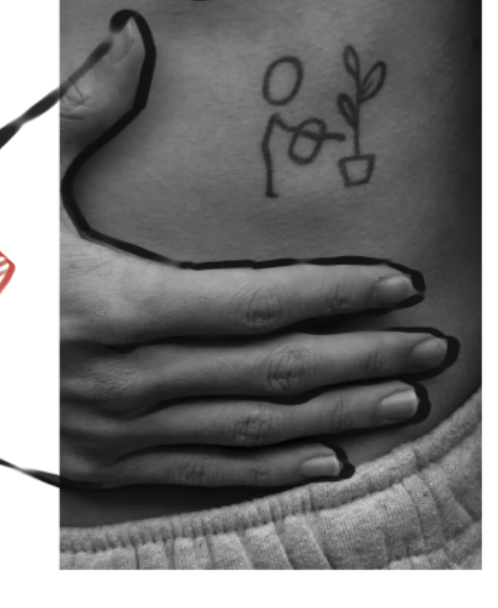
His tattoo of a man watering a plant on his left rib cage stands as a reminder to care for himself. Kim says his parents, who serve in a Christian ministry, have been understanding.
“I realized our parents also live under a certain way they have grown up,” he says, “Once you bring up a change, they also become more open to things, and in a way, more destigmatized by you.”