Halmeoni, saranghaeyo
Remembering my grandmother on her behalf.
Story by Cate Bikales
Design by Indra Dalaisaikhan
“저는 당신의 손녀 케이트입니다. 저를 기억하시나요?”
“I am Cate, your granddaughter. Do you remember me?”
She looked at me with a blank stare, and I felt a piece of my heart break.
For a long time, I denied the signs of my grandmother’s dementia. I refused to believe she could ever forget me — the person who had grown up for the past 20 years right by her side. But the horrible thing about a disease is it can make your worst fears become reality.
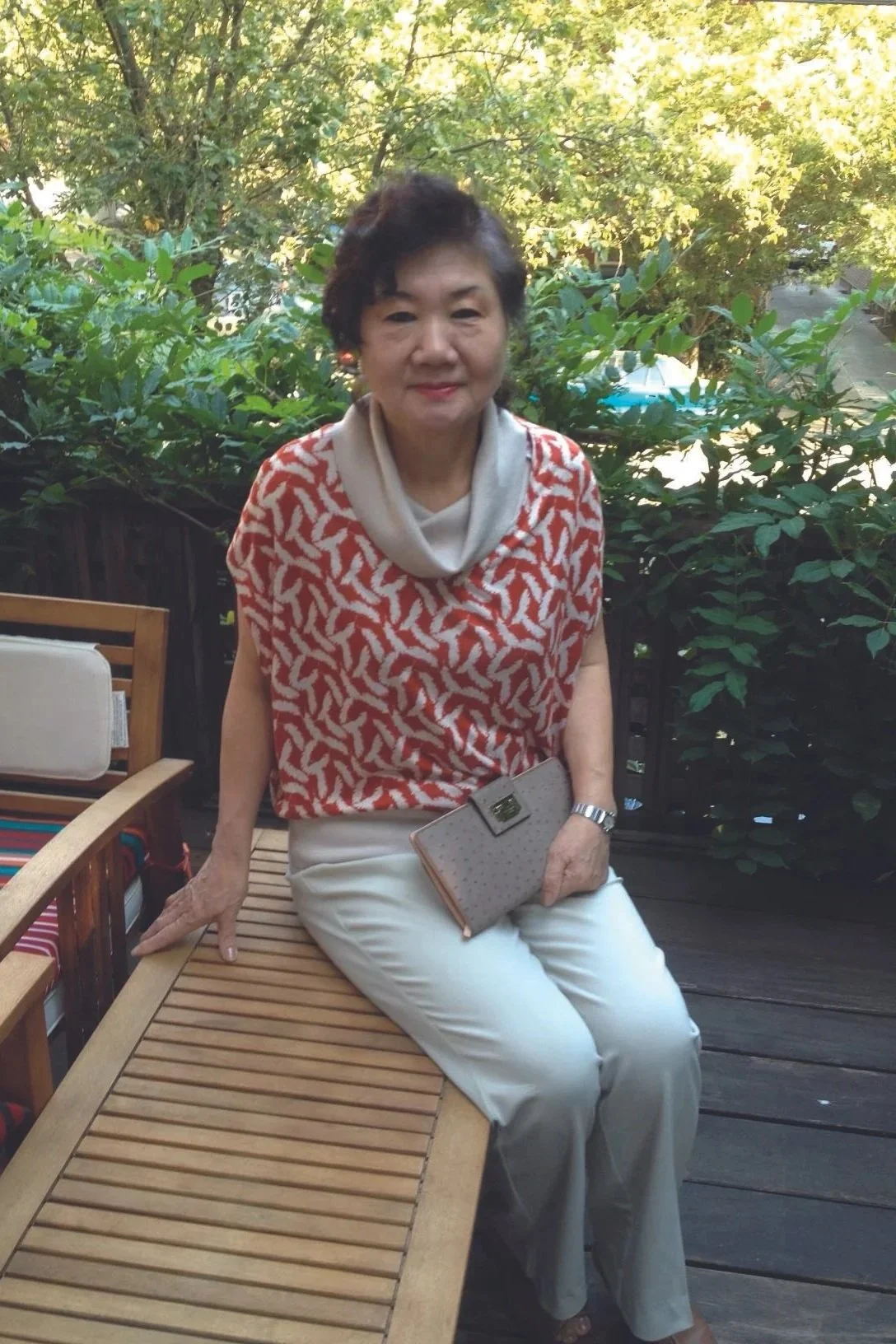
In just four months, Maya, as I have always called her, transformed from cheerful and loving, albeit slightly forgetful, into a shell of the woman she once was. She had completely disappeared into her own brain.
As I stared into her hazy eyes at the memory care facility, she felt thousands of miles away. Not only was I losing my best friend and the person I have looked up to my entire life, I felt I was losing a part of myself: my connection to my Korean heritage.
Growing up biracial, I often felt split between my Korean and white self, never fitting fully into one or the other. I felt too white in affinity groups but also never quite thought my white friends understood me.
It was because of my grandmother that I developed a stronger connection with my Korean identity than my white one.
My family spoke English at home, but because my grandmother never became proficient in the language, I learned how to speak Korean to communicate with her. My speaking ability was elementary at best, but having her around to practice always made it easier to hold onto those basic skills.
Maya also helped me develop an appreciation for traditional Korean food, clothing and music.
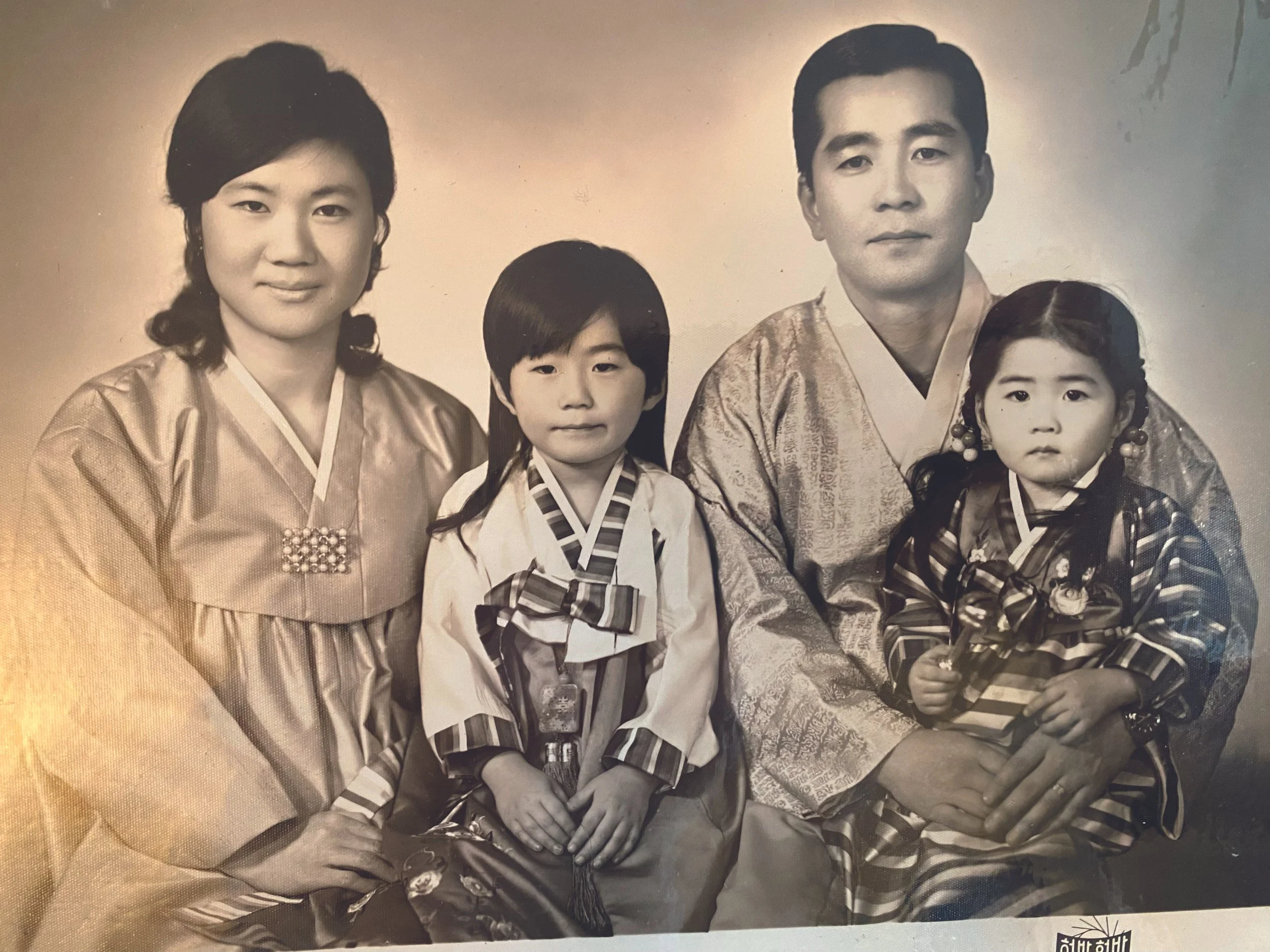
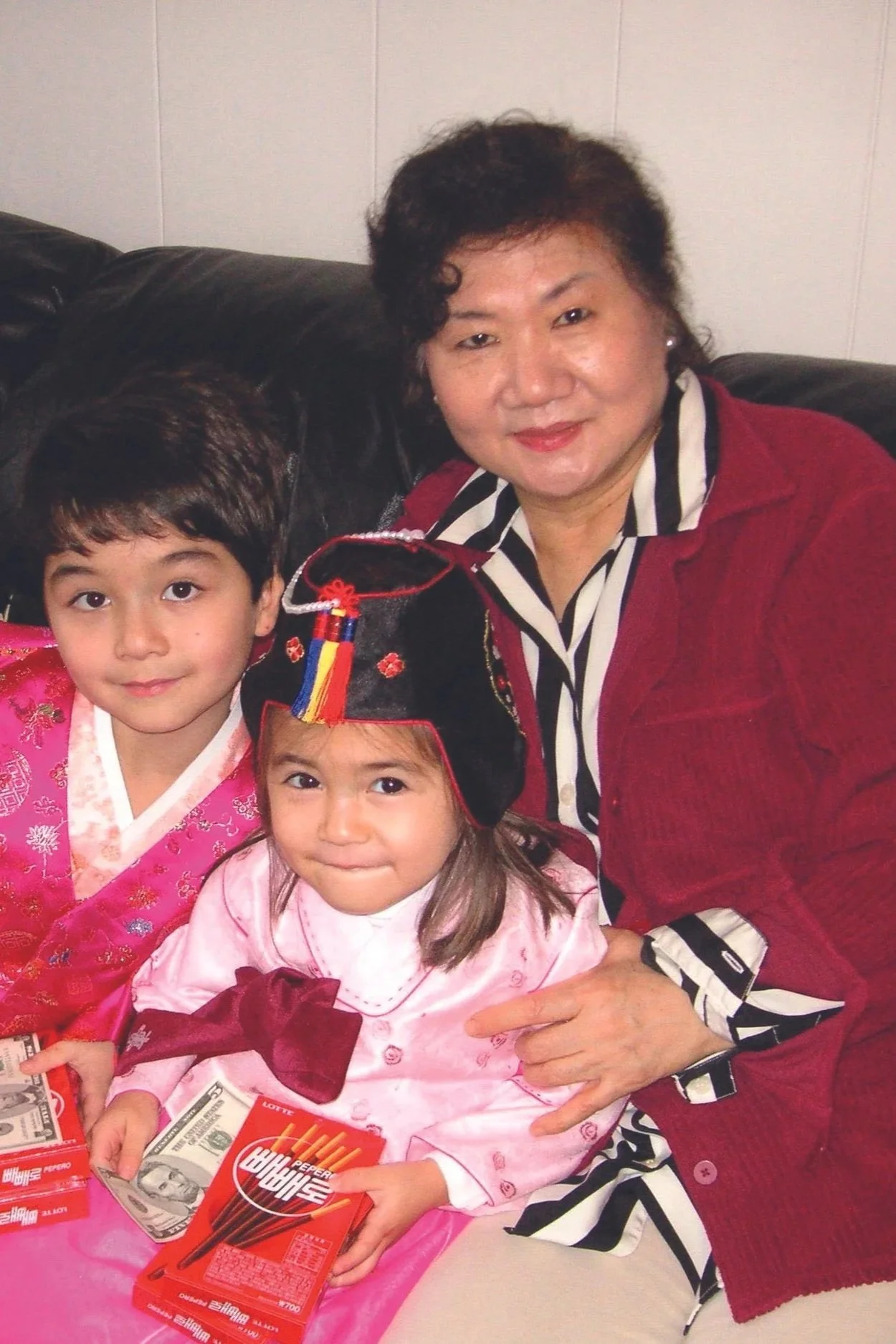
Every New Year’s, my brother and I would dress up in our vibrant pink hanboks, adorned with beautifully embroidered flowers and shapes, and bow to our grandmother, wishing her the best for the new year: 새해 복 많이 받으세요 (saehae bok mani badeuseyo). Afterward, she would fill the dining table with all kinds of Korean delicacies — steaming bowls of kimchi jjigae, plates piled high with soft and chewy tteokbokki — and my family would eat until we felt like our stomachs were going to burst. In a way, she showed her love through that food. Whenever I told her I was full, she always made me eat just one more bite.
Maya’s desire to put family first inspired me to treat those around me with love and respect. I remember the joy I felt each day when I saw her smiling face waiting at the bus stop to pick me up. After we got home, the food would already be waiting for me. Her gimbap was always my favorite, her little hand-wrapped gifts of flavor.
Every time I looked into her eyes, they would be sparkling with love. All I could see was how proud she was of me.
The rest of the afternoon was always filled with laughter. No matter what we were doing — reading silly Korean books, singing Korean children’s songs, watching meaningless Korean reality TV — my grandmother always reminded me of how important it was to stay connected to that side of myself.
But how do you hold onto a part of yourself that is so strongly tied to a person who is slipping away?
In 2020, the early stages of her dementia began to show. She would misplace her keys, and we would spend hours searching to find that she had left them in the fridge or in the bathroom closet. Sometimes, she would ask me a question and, after I answered, immediately ask it again. I could tell she was frustrated with herself, and it was not her fault, but it was easy for me to get irritated with her behavior.
I started seeing her less as I got busier with school and friends. She would invite me to sleep over at her apartment, and I would choose to stay home and do school work instead. When I became vegetarian, she never really understood what it meant. It often became a point of contention, and when she made me traditional Korean food, which often contains meat, I would eat the leftovers at my parents’ home instead.
I regret it. I wish I had taken advantage of the time I had with my grandmother when she was still mentally present. I wish I had given her the same unconditional love she always showed me.
It hurts to see her face now and realize I did not cherish these last few years. It hurts even more that we no longer share the memories of our years spent side-by-side. It takes losing (or starting to lose) someone to realize how much they truly mean to you.
As she falls away, I grapple with how to hold onto my own Korean identity. With a fading connection to the language and its traditions, how do I stay anchored to that side of myself?
In the past year, I have asked myself this question dozens of times. At the beginning, I was often left with a sense of distress. It felt impossible. But now, I realize the best I can do is take advantage of the time I still have with her. Even if she is not herself mentally, her presence still reminds me of the love and care she has shown me throughout her life. Although it feels like part of my identity is slipping away with her, I realize that losing her does not mean I have to lose what she has taught me. I will still be Korean when she is gone.
I will continue to uphold her treasured values of kindness and family. I will learn the lessons and recipes that she made such a big part of my life growing up. I will practice her language so I do not lose it when she is gone. I will keep our memories and my heritage alive, and carry with me the resilience she has shown throughout her life.
My grandmother has always been a fighter. She left Seoul, South Korea, in 1977 — the only home she had ever known — and immigrated to America to start a better life for her three children. Because she could not speak English, she was forced to work as a seamstress in a New York City sweatshop to provide for her family. My mom always told me that, through it all, she never complained. She never showed signs of anger.
Now, she continues to fight.
A few days before I left home to return to Evanston, my mom and I once again visited my grandmother in the memory care facility. For the majority of the visit, she was in her own world, talking to her sister on an invisible “cell phone” about how she was going to be killed and insisting that the food we had brought her was poisoned. She looked anxious, almost weak. It pained me to see her in that state. It was hard to imagine she was the same person I had always known — someone who was always so positive and full of life.
But, there were moments of clarity. As I sat by her side, tears streaming down my face, she took my hands into hers, looked me in the eyes and reassured me: “괜찮아요 (gwaenchanh-ayo)” — “It’s OK.”
In that moment, I was reminded of the timeless nature of love. My grandmother’s love has impacted me in ways that I will carry with me forever. Each day, her memory fades, but my connection to her and all she has taught me grows stronger.
The next time I visit her, I will hold her hand tight and remind her how much she means to me.
Even when she is gone, I will remember her smile. I will remember the way she laughed with me, the way she cried with me, the way she brightened my day. I will hold my grandmother close to my heart and lead a life of courage and love, just as she has.
할머니, 사랑해요 (halmeoni, saranghaeyo). Grandmother, I love you.