Horror comes home

Silent Hill’s latest installment returns to its roots.
by Jackie Li

In 1999, a team of Japanese game developers changed the trajectory of horror in the digital sphere. Finding terror in the backdrop of a small American town, they crafted a uniquely nuanced and immersive experience that culminated in the birth of a cultural phenomenon. This game would go on to head one of the most beloved survival horror series of the 2000s: Silent Hill. 26 years later, Silent Hill f, the most recent entry in the now veteran franchise, hopes to recontextualize itself in a new dimension of horror — one grounded in its Japanese roots.
Broadly, Silent Hill and the survival horror genre it helped push forward were founded on two major influences: the action-oriented viscerality of Western horror and the psychological elements of Japanese horror. Across the eight mainline games that have come before Silent Hill f, all of them have revolved around the mysterious American town of Silent Hill, which lures its main characters into a familiar suburban sense of comfort only to transform into a suffocating personal hell — so much so that the specialized setting became a major part of the series’ brand.
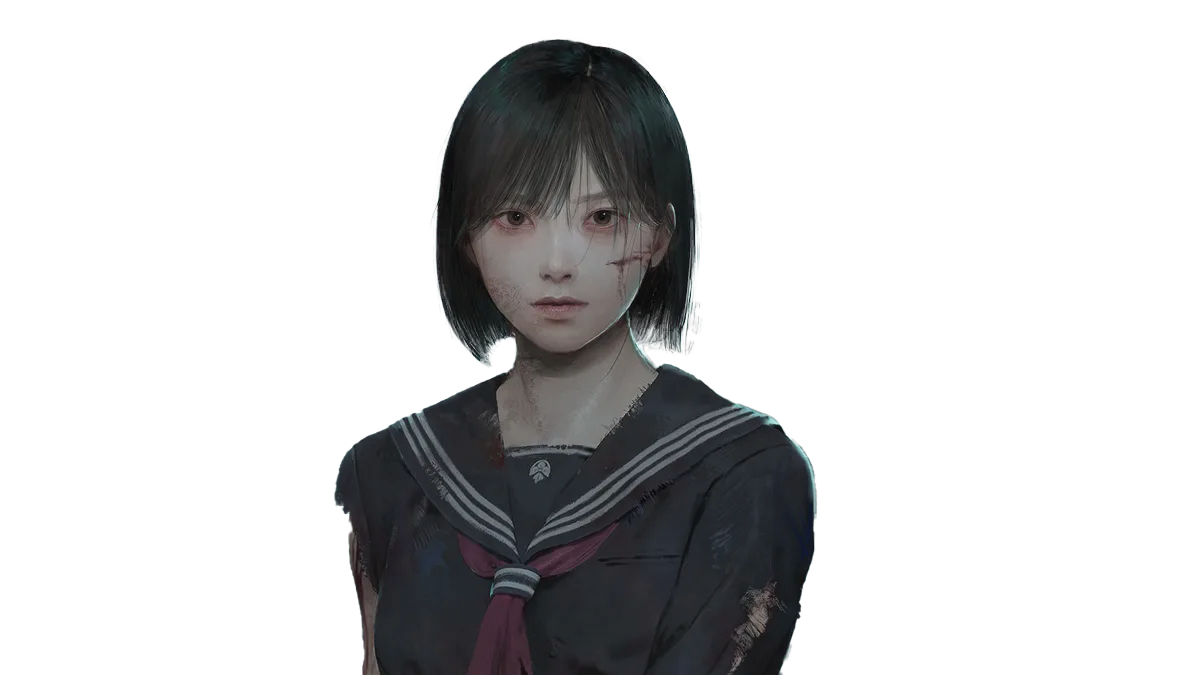
But Silent Hill f, released on Sept. 25, displaces the franchise from its tried-and-true traditions. The game follows protagonist Hinako Shimizu, a young girl living in rural 1960s Japan, as her beloved hometown of Ebisugaoka, wrecked by the wrath of a lethal Fog Monster, turns into a ghost town. Throughout the game, we play as Hinako in two different situations: one where she explores her deserted town with her three closest friends and one where she traverses a dangerous Otherworld, guided by a mysterious fox mask-wearing man who regards her with obsessive interest and attention.
Silent Hill f’s choice to relocate the American-based franchise to Japan is admittedly a clever marketing tactic, especially for a series whose recent games have failed to drum up much traction or praise. Yet, I believe the move is more than just a matter of rebrands and sales; it subverts the troubled foundations of survival horror video games.
In the first place, it might seem strange that a team of Japanese developers thought to make a survival horror game set in America. It might seem even stranger that the same is true for other notable Japanese video game franchises both in and outside of the genre, like Resident Evil and Metal Gear Solid. But when we take a more critical look at the medium, we notice a pattern: The bodies that gaming has been concerned with are predominantly white.
Andrei Nae, a lecturer at University of Bucharest specializing in game studies and British American literature, emphasizes the prevalence of the white, hypermasculine undercurrent that we see in modern gaming. Nae says the roots of these patterns trace to arcades, where gaming was first integrated into the social sphere as a violent, male-coded pastime. These patterns continue to influence how these games are marketed, and who these companies — despite being Japanese — want to sell to.
“From the very onset, the socialization of the members of this gaming subculture from the ’80s was inherently linked to a patriarchal and very rigid understanding of masculinity … [so] in the ’90s whenever you made a game, you had to cater to an audience which was already there. We’ve been struggling with that ever since,” Nae says.
However, through its foray into a new, Japanese landscape, Silent Hill f brings Asian bodies into the franchise’s existing conversation of exploring humanity through horror. Certain Silent Hill games devote as much time to detailing the monstrous terror of its enemies as the psychological depth of its protagonists. This is to demonstrate to audiences the intricacies of human nature; the monsters and humans emerge as two sides of the same coin, two facets of a greater, more complex whole. Thus, in the world of Silent Hill, all bodies become worthy of critical attention — even monsters, who customarily serve as stand-ins for marginalized ‘others’ in horror. To see that privilege, which Silent Hill often granted to white characters, gifted to an all-Asian cast in Silent Hill f challenges the rules that dictate who has the right to breathe and bleed on our screens. Normalizing Asian horror doesn’t just mean normalizing racialized pain or suffering — it asks for Asian bodies to be taken more seriously.
However, this new game doesn’t question the authority of just racial hierarchies. Silent Hill f is fundamentally about dismantling traditional power structures in society, with a focus on the patriarchy. Hinako’s struggles with monsters and mortality are all metaphors for her inner conflict with womanhood and coming of age in a controlling, conservative environment. The game reveals that the bloody scenes of death and destruction we traverse through, in fact, are in part caused by Hinako’s hallucinations. In reality, the biggest crisis she faces is an undesired arranged marriage organized by her abusive father. By forcing her to assimilate into the ranks of a new family, the marriage threatens to rob her of her existing identity, bringing to light the consequences of patriarchal pressure on young girls and their futures.
But Silent Hill f’s most striking piece of social commentary is delivered through the terrifying clarity in which the final stretch of its narrative is developed. While most Silent Hill games end in obscurity, Silent Hill f isn’t afraid of the overt, and I believe this choice pays off in the long run. In the game’s true ending, the horrific manifestation of Hinako’s internal battle becomes a supernatural proxy war. It’s revealed that Hinako is a pawn in a larger game, having been covertly manipulated by two deities — the god of the foxes and the god of obsolete items — who are battling for power in the form of human faith in Ebisugaoka. Possessing incredibly rare magical blood, Hinako becomes the deciding factor of who triumphs in the struggle. The fox god wants her for the power in her veins, going as far as organizing her arranged marriage into his family to solidify the reign of his religion over the town. The other god wants to use her to destroy the foxes: If the wedding were to fall through, the foxes would lose power and thereby fail to secure a stable connection with the humans. Thus, the bitter deity of abandoned items does everything in his power to manipulate Hinako into running away from the ceremony, driving the foxes to their end.
The events detailed in the true ending of the game compel us to consider the forces that lie below the surface: the oppressive structural power that is personified through the deities. Just like the gods that rule over Ebisugaoka, our man-made hierarchies and constructs lose their influence as soon as people stop believing in them. To maintain their longevity, they trade in marginalized flesh and blood, fashion absurd rituals and rules, and encourage those in power to use fear and violence for the sake of stability. Silent Hill f points out that no human can be more evil than the systems that they are agents and facilitators of — to correct for decades of oppression and violence, we ultimately cannot make progress from fixating on the individual and the interpersonal.
The game conveys this message best in its attempts to humanize some of the more misogynistic male characters. Through attributing their wrongdoings to manipulation by the warring gods, the game frames their actions as products of a larger problem. As such, being anti-men isn’t really the core of the Silent Hill f’s argument; instead, it focuses on encouraging players to be cognizant of the underlying systems that groom, control and oppress them.
Through giving such abstract concepts tangible forms that we can battle in-game, Silent Hill f renders these power structures visible to us so that we might be able to better identify and address them in reality. By the end of the game, we don’t fully defeat these gods, nor does Hinako entirely escape from the patriarchal pressures in her relationships — it reflects the reality that structural change is hard to make. But while Hinako may not have been able to see her liberation through to its completion, why should we, as the players, stop there? The game’s ending feels like a call to action: the parallels we see between its story and our modern society tell us there’s still much to be done.
With a score of 86 on Metacritic and over a million copies sold in less than a week, Silent Hill f’s domestic and international success demonstrates that, despite how convoluted and specific its narrative may seem, the game has an impact. Its ability to resonate across cultural barriers comes from its nuanced understanding of marginalization and the fight for one’s agency, which Rem, a netizen from Saudi Arabia, says they connect with.
“I thought: ‘Wow, as alone as I might feel at times, I see myself here.’ The female experience is united in a way where we all experience the same things — not to the same extent, but we all share a lot of the same troubles … and pains. It feels refreshing to see that unfiltered [experience],” Rem says.
The game’s “homecoming” — a return in setting, narrative and essence to Japan — allows Silent Hill f’s themes of empowering and uplifting marginalized experiences to leave a greater mark. In the narrative, Hinako is given previously-denied agency to choose her future for herself. In the broader context, Asian bodies are given previously-denied agency to tell their own stories of trauma and suffering. By allowing Asian culture and identity to thrive in a genre that rarely finds them relevant, the game’s discussion and themes about liberation feel all the more genuine, striking and resonant. Silent Hill f visualizes the invisible and tells a story that makes its marginalized audience feel like they matter.