
Inheriting imperfection
STORY BY CHLOE PARK
DESIGN BY HANA AKAKURA
“It starts to feel less like a record of mistakes and more like a map tracing how regret and misunderstandings are carried down across generations.”
— Chloe Park, Medill third-year
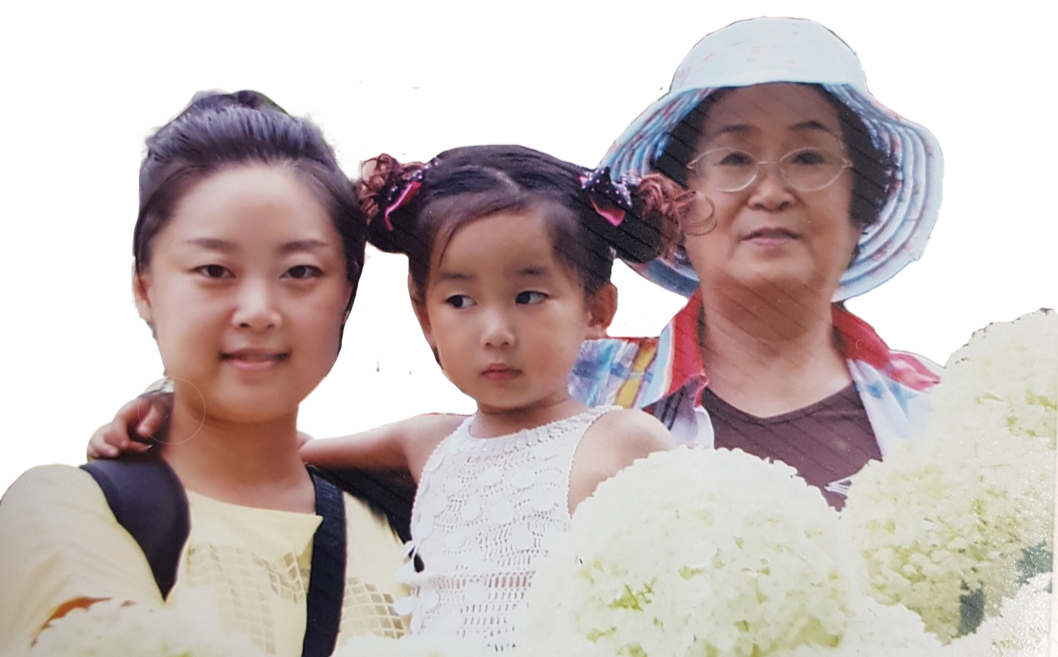
Young Chloe sits in the arms of her mother, left, and grandmother, right, for a photo in a flower field.
Photo courtesy of Chloe Park
Somewhere in the back of a dusty drawer at home, there’s a small notepad with “THINGS NOT TO DO TO MY FUTURE CHILDREN” scribbled in all caps across the cover. I find myself reaching for it every time I’m back in my hometown for break.
I started the list sometime in middle school, in the aftermath of a particularly bad fight with my parents. I don’t remember what exactly sparked it, only that I was 14 and already building an inventory of grievances against them. The notepad became a vow that generations of toxic parenting would end with me.
It wasn’t until a recent conversation with my mother, over a sizzling grill picked clean of meat and half-finished soju bottles, that I began to see things differently.
“Your father and I grew up in rougher times, when our relationships with our parents weren’t as healthy as this,” my mother says, gesturing at the ease of our conversation. “We had many discussions about how we wouldn’t raise you guys like how we were raised.”
Her admission sobers me. As we talk, my mind drifts to the notepad tucked away in my room just down the hall. It starts to feel less like a record of mistakes and more like a map tracing how regret and misunderstandings are carried down across generations.
I flip to the first entry:
1. Expectations
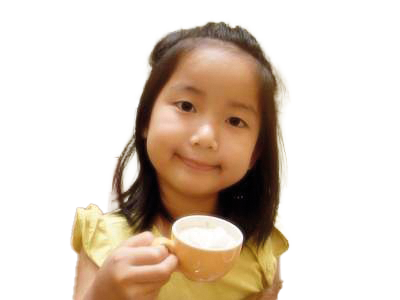
Young Chloe lifts her teacup toward the camera.
Photo courtesy of Chloe Park
When I entered seventh grade, my mother had a vision for me.
A year earlier, at my brother’s middle school graduation, he and a handful of other students were called up one by one to receive high honor roll awards for earning all A’s. It became my mission to bring home the family’s second all-A distinction.
I spent the next two years agonizing over getting a 4.0 GPA — anything short would leave an empty spot beside my brother’s trophy, a reminder of my failure.
By the time my trophy made it onto the award shelf, the pressure had already settled into my journal, where my parents’ expectations had curdled into resentment.
Years later, sitting across from my mother and picking at the burnt scraps in the pan, I begin to understand where that pressure came from.
“My grandparents had a lot of kids, but they were busy making money, so my parents had to take care of themselves,” my mother says, adding that it was a time when women weren’t expected to pursue schooling.
She says her mother wanted a better education for her children and used every available resource to send her daughters to school. My mother says she still regrets taking those efforts for granted and not studying hard enough.
Now, my parents run a small beauty supply store in rural Tennessee. They start the day before I even wake for my 9 a.m. class, opening the shop for a long day spent helping customers in broken English. At closing time, they count dollar bills with their wrinkled hands, then drive home well after sunset to eat Chinese takeout from the only Asian restaurant nearby.
When I visit during school breaks and urge them to retire, my mother just sighs.
“This is why your father and I wanted you to study hard,” she told me once, as we counted inventory together. “We want you to be successful and retired by the time you’re our age, not working physically demanding jobs like us.”
2. Anger
My mother has always been known in our family for her short fuse, a flaw she doesn’t bother to hide. My dad and brother like to say I’m a close second, and it’s become a running joke that whenever my mother and I butt heads, everyone else braces for the fallout.
We laugh about it, but seeing my mother’s worst trait manifest in me is frightening. When we fight, I blurt out harsh words I didn’t even know I was capable of.
This entry is a promise that I won’t let anger define what my children see in me. It’s a promise my mother says she once made too, but knows she hasn’t always kept.
“I remember thinking I shouldn’t scream and hit you guys, but I’m a human being too,” she says. “I end up yelling when I can’t control my emotions. When you guys did something bad, I got physical, even though I knew I shouldn’t.”
She adds that it’s a product of what she saw growing up, and that people who didn’t grow up in peaceful households are less likely to pass those behaviors on to their children.
Holly Chuang, a psychotherapist at Agave Studio who specializes in working with immigrant parents and their adult children, says that anger often functions as a defense mechanism shaped by what’s modeled in childhood.
“You might see in more Western families, they sort of shrink into sadness,” Chuang says. “They can be two sides of the same coin, because we’re powering up with anger, but really we feel so hurt underneath: ‘Do you not value me? Are you shaming me? Did you not see I had your best intention in mind?’”
I ask my mother if she thinks I’ll repeat the cycle of anger, and she hesitates.
“I don’t think you will,” she says finally. “You grew up here. Getting angry like that is seen differently in the United States than in Korea.”
“It’s not perfect. But it’s constant efforts. That’s what changes things.”
— Eun Soo Kim, Chloe Park’s mother
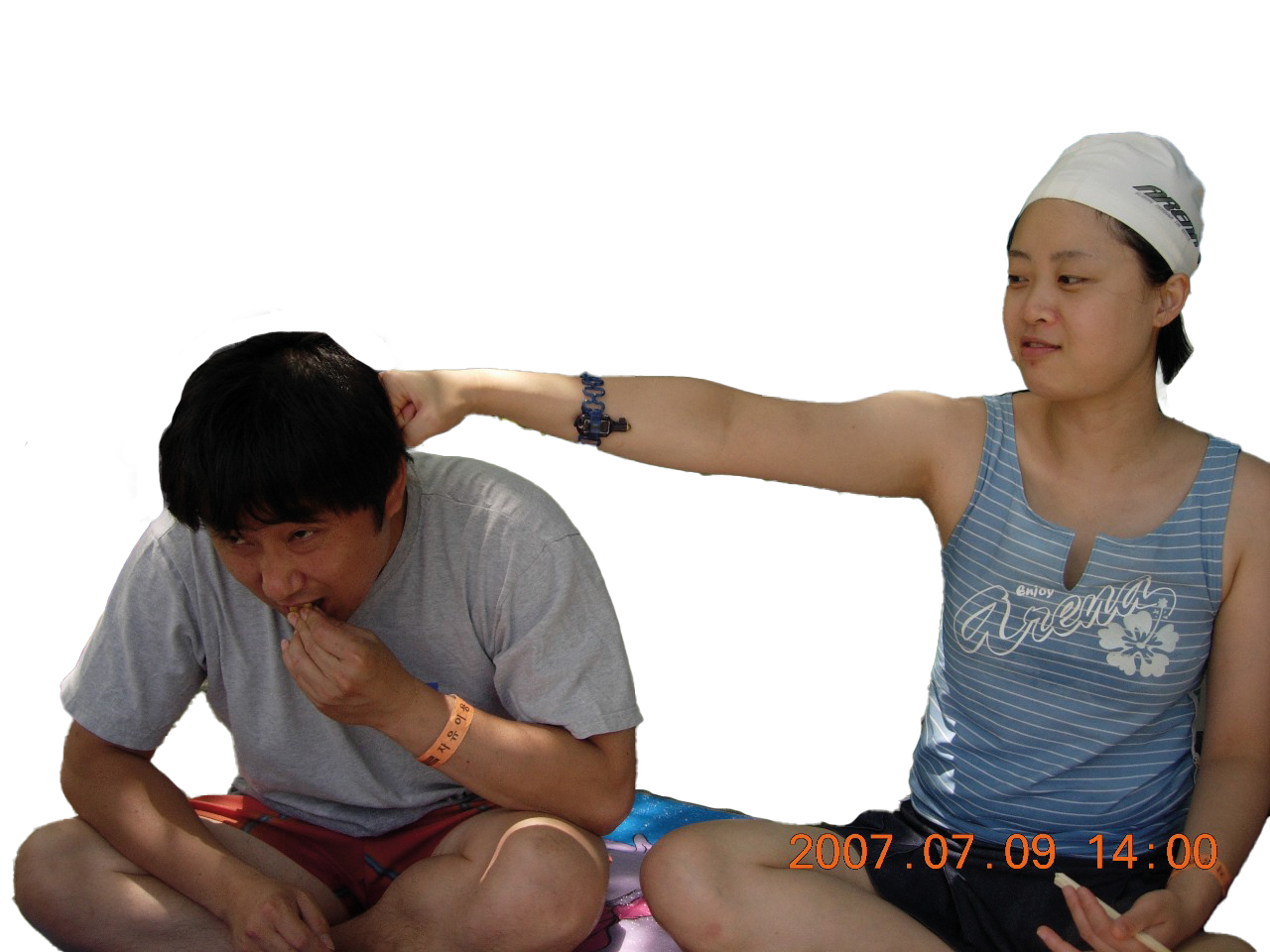
At the beach, Chloe’s parents bicker playfully in front of the camera.
Photo courtesy of Chloe Park
My first memories of life in the U.S. are nights spent trying to block out the sound of my parents fighting.
I still remember the cold air of the night when a particularly bad argument sent my mother storming out the door when I was in elementary school. My brother burst into our shared room, inconsolable at the thought that she might never come back, and pulled me outside to search for her. We found her eating ice cream at the Oberweis just a five-minute walk away.
My parents stopped arguing as I grew older, but those nights of muffled shouts behind closed doors earned a permanent place in my notepad. Until college, I swore I’d never touch alcohol, afraid it would turn me into the angry person my parents used to become when they drank.
Now, as we share a drink, I ask my mother what she most hoped not to pass down from her own childhood.
“Your grandmother and grandfather always fought,” my mother says. “So I didn’t want you guys to see your dad and me fighting at home. Even when we fought, it was nothing serious. Nothing like life-or-death arguments or talk about divorce, right?”
I raise an eyebrow, but she hushes me before continuing.
“My dad cheated on my mom, and they always fought because of that,” she says.
She tells me about being sent to confront her father’s mistress with her sisters, then about chasing down her mother after the worst fights, worried she might leave for good. The latter part hits close to home.
My mother calls these memories lasting trauma, and I ask if she was ever afraid of marrying someone who would do the same.
“I didn’t even want to get married when I saw my parents,” she says, telling me she only changed her mind because of my father. “But I was never scared that your dad would do that to me. He isn’t like that.”
When I ask if she resents her father, she tells me there’s nothing to hate about a dead man.
“But I do wonder,” she says, “why he fell short on us. How he could do that to his family. In my opinion, my parents learned from how they were raised. It was the war era, so that was the only model of family they knew.”
My mother explains that the norm of patriarchy in South Korea at the time positioned men as unchallenged heads of the household, allowing to make decisions unilaterally without listening to or considering the needs of the rest of the family.
She says that although she grew up in a tense household, her effort not to pass that down came from seeing healthier families, both in real life and on TV. It took a conscious effort, she explains, to recognize her own unhappiness and choose not to repeat it.
I ask whether it’s possible to break those habits with a single person.
“It’s not perfect,” she says. “But it’s a constant effort. That’s what changes things.”
3. Conflict
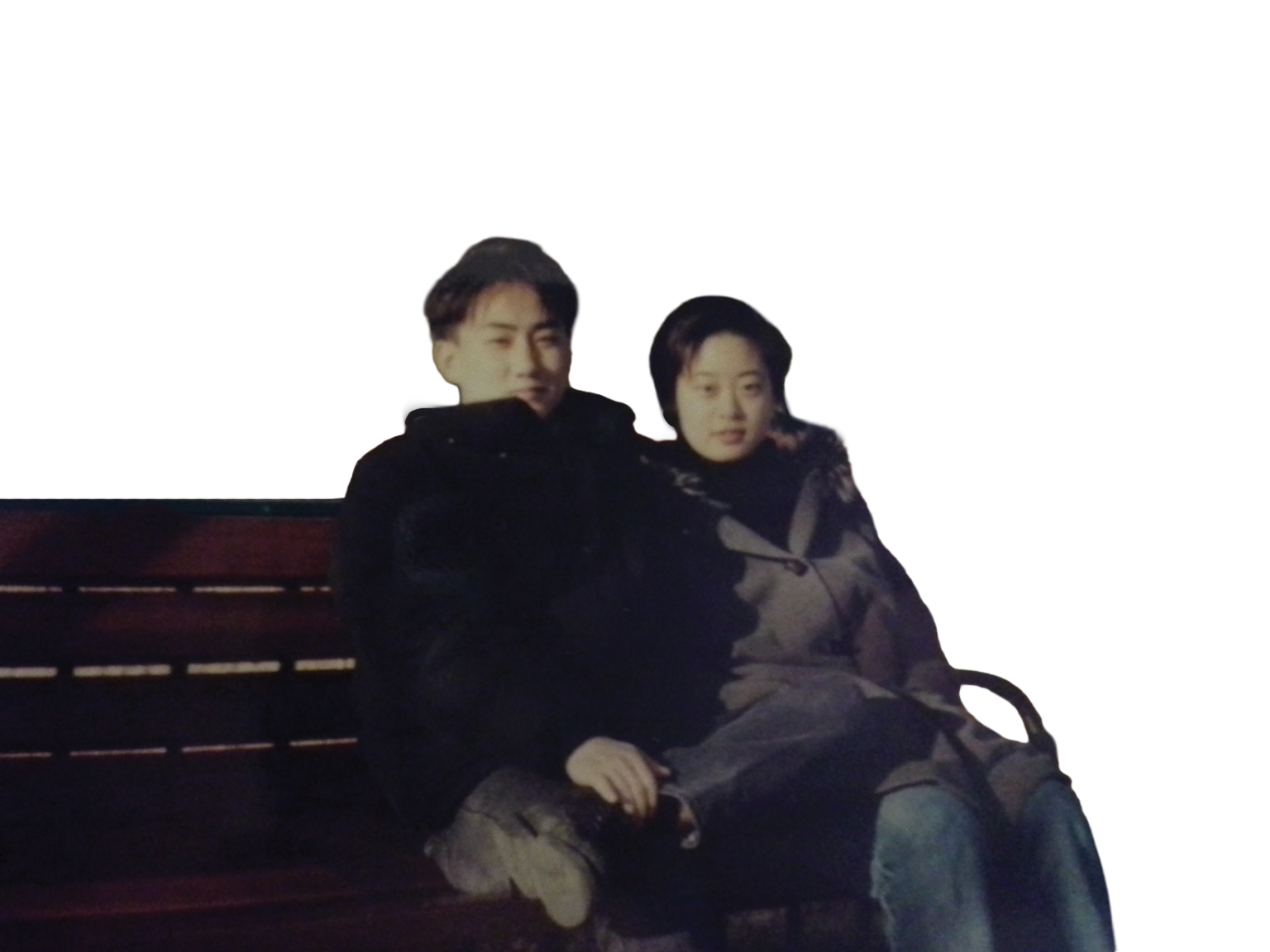
In thick winter coats, Chloe’s parents sit side by side for a photo during their earlier years in Korea.
Photo courtesy of Chloe Park
By the time the grill has gone cold, my mother is already clearing the table in the silence after our conversation. I watch her hands move across the table, the same hands that carry the weight of her parents’ mistakes that she had tried to shield me from.
In the back of a drawer at home, there’s a notepad with “THINGS NOT TO DO TO MY FUTURE CHILDREN” scribbled across the cover. I’ll probably still reach for it every time I come back.
Now, it’s not a checklist, but a reminder of what’s still being rewritten.
The conversations in this article are translated from Korean to English.