On their radar
Increased government surveillance puts international students on edge.
by Chloe Park
The calculations happen invisibly, with intelligence stored deep in a federal database. A hashtag on X. A list of names from a university. A face barely grazing the photo of a crowd on Instagram. Somewhere, a never-sleeping algorithm helps determine whether a student has crossed an invisible line between safety and suspicion.
Launched in March, the federal government’s “Catch-and-Revoke” initiative allows authorities to cancel the visas of foreign students perceived to support Hamas, according to the State Department’s Substack and Axios. Under this strategy, the State Department uses artificial intelligence-assisted analysis of news reports, social media posts and public records to identify foreign nationals it suspects of antisemitic activity or support for terrorism. The data can include photos from protests and surveillance of tens of thousands of international students’ social media accounts.
“Catch-and-Revoke,” coupled with expanded social media vetting for all visa applicants, marks a heightened wave of the second Trump administration scrutinizing foreign nationals on U.S. college campuses. Often unaware of who is watching or what activities draw disapproval, international students at NU say they are grappling with the fear of being silenced and surveilled with little to no support from University authorities.
For international student and Weinberg first-year Yates Park, these concerns came before he stepped foot on campus. Although his status as a dual citizen exempted him from the visa application process, he recalls his friends stressing over their online presence and what might be held against them.
“Some of my friends that had political activism on their posts deleted their Instagram or their social media because they were scared,” Park says. “People were also kind of annoyed because they had private accounts, like spam accounts, that they had to open to the public so government officials could screen through them.”
These concerns are not unique to Park’s friends. According to fourth-year Anthropology graduate student and Northwestern University Graduate Workers (NUGW) President Mounica Sreesai, even renewing a visa requires applicants to go through the interview process again. During that period, they also must make their social media profiles public.
“It’s not just a threat in terms of freedom of speech or political stances, but a lot of people also have their social media accounts private for various reasons: For example, their sexuality, gender or bullying or trolling,” Sreesai says.
For one McCormick second-year from the Middle East, who spoke on the condition of anonymity for fear of his education being jeopardized, the heightened scrutiny from the federal government was shocking. The anonymous student says even just a year ago, he would openly engage in political conversations with friends or even strangers. He can no longer imagine doing that now.
The second-year says many international students come from authoritarian countries where free speech is restricted and arrive in the United States expecting a place that fully accepts freedom of expression.
“I would say that the biggest culture shock I’ve faced since I got here is how different it is and how even less flexible it is, and how much harder it is for people to actually speak about the government and criticize it, or even make fun of anything,” he says. “The government could literally end your career, your education, get you deported, do all of that.”
He says not being able to speak about issues like the Israeli-Palestinian and Russia-Ukraine conflicts makes him feel “really bad,” as fear of losing his education and future now keeps him from advocating for causes he feels strongly about.
Medill second-year Junseo Lee says some of his friends deleted their social media accounts, fearing old posts they liked would be taken out of context — a concern mirrored by a claim in June that a Norwegian tourist was denied entry to America over a meme of Vice President JD Vance on his phone. The Department of Homeland Security later said that the tourist was turned away for drug usage, but the accusation continues to circulate online.
Lee says race also shapes how students experience surveillance.
“The nature of the administration, I think, is that they definitely have a race-based agenda. It doesn’t target me as much as it does some of my other friends who are from, for instance, the Middle East or from Hispanic countries or South America,” Lee says. “I would consider myself at less risk compared to those people.”
Assistant professor of instruction of Legal Studies Abigail Barefoot describes the protections for international students in the digital context as the “wild wild west,” due to laws like the Foreign Intelligence Surveillance Act of 1978 (FISA), which grants the federal government the authority to monitor foreign nationals considered a security risk.
“We might think, ‘Oh, well I wouldn’t be labeled as a terrorist,’ or ‘I’m not doing anything that would be seen as suspicious,’” Barefoot says. “But we’re seeing in this political moment, as well as historically, that who or what is seen as a terrorist is often political, and can wrap up people who are doing things that are within their First Amendment rights, but their actions or their speech is labeled as supporting terrorism. We see this a lot with pro-Palestinian protesters.”
Although FISA initially only allowed for electronic surveillance, several amendments have broadened the law’s scope to other intelligence sources, such as physical searches and business records.
Expanded online monitoring from the DHS and the State Department has especially focused on international students, says Lisa Femia, a staff attorney at the Electronic Frontier Foundation (EFF) who focuses on free speech, the First and Fourth Amendments and government surveillance.
Femia says federal agencies have adopted new technologies and programs to look for international students engaging in speech considered hostile to American values. That could include speech that didn’t sufficiently mourn right-wing political activist Charlie Kirk’sdeath, supports pro-Palestinian causes or criticizes the Israeli government.
These tools include SocialNet and ONYX, programs that scan social media platforms, chat rooms, search engines and news streams for “shifts in sentiment and emotion” and keywords that may indicate an individual poses a national security threat, according to a legal complaint EFF helped file against DHS and other federal immigration-related agencies in October.
The lawsuit challenges a government program that monitors the social media activity of international students and visa holders, arguing that it violates the First Amendment by chilling lawful political expression.
According to a survey of more than 770 graduate student workers around the country, 84.4% of noncitizen respondents reported changing their social media in response to the program. Of those, 97.2% reported doing so out of fear that the Trump administration would target them personally. United Auto Workers, a labor union representing many graduate workers and one of the plaintiffs in EFF’s lawsuit, conducted the survey.
“This administration is going after a speech that is core [to the] First Amendment, protected speech in a way that we haven’t seen before, like criticism of the Trump Administration,” Femia says. “The First Amendment was put into place to protect political speech. First and foremost, that is at the highest. Even looking for this speech, in a way to chill people from speaking it or to punish people for expressing these viewpoints, is problematic in and of itself.”
While much of the concern around surveillance centers on social media, the uncertainty surrounding the Trump administration’s policies has also left students uneasy about other forms of monitoring that might be taking place. For Lee, these fears were one of several reasons he decided to halt his work at The Daily Northwestern, after his parents voiced concerns about the risks of him pursuing journalism.
According to Lee, while surveillance lingers in the back of students’ minds, its impact can often feel less urgent compared to general uncertainty surrounding status. This is partly because students don’t know what is being monitored or how closely.
Surveillance of international students often involves tools that people might not typically recognize as surveillance, compared to more overt or dystopian tactics, Barefoot says.
“We can think about things like the Student and Exchange Visitor Information System, which is already recording internationals’ visa status,” Barefoot says. “What is their major, what’s their disciplinary record at school? All of that can be shared and updated.”
She clarifies that the system is primarily used by federal authorities for immigration issues, not local law enforcement.
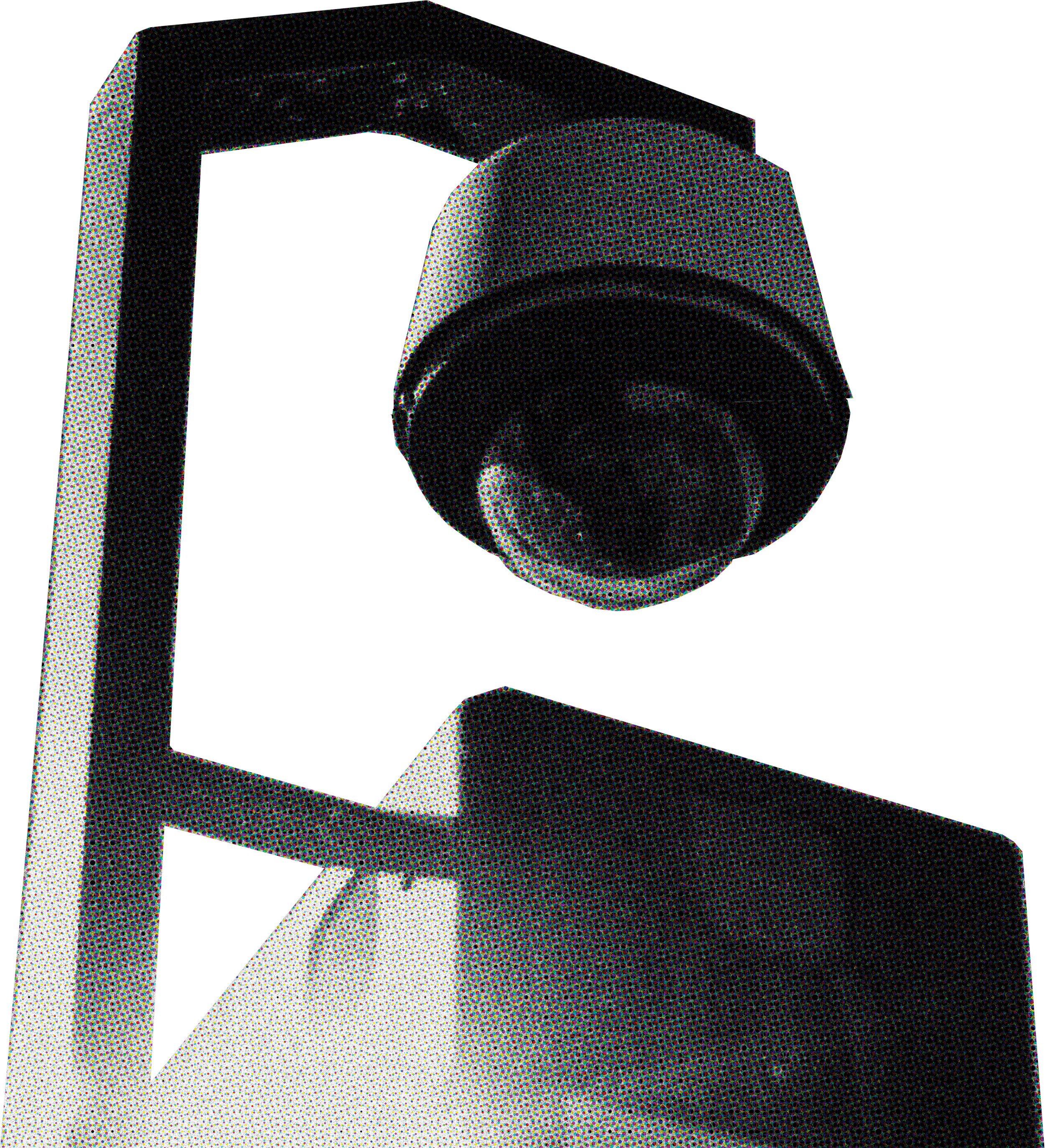
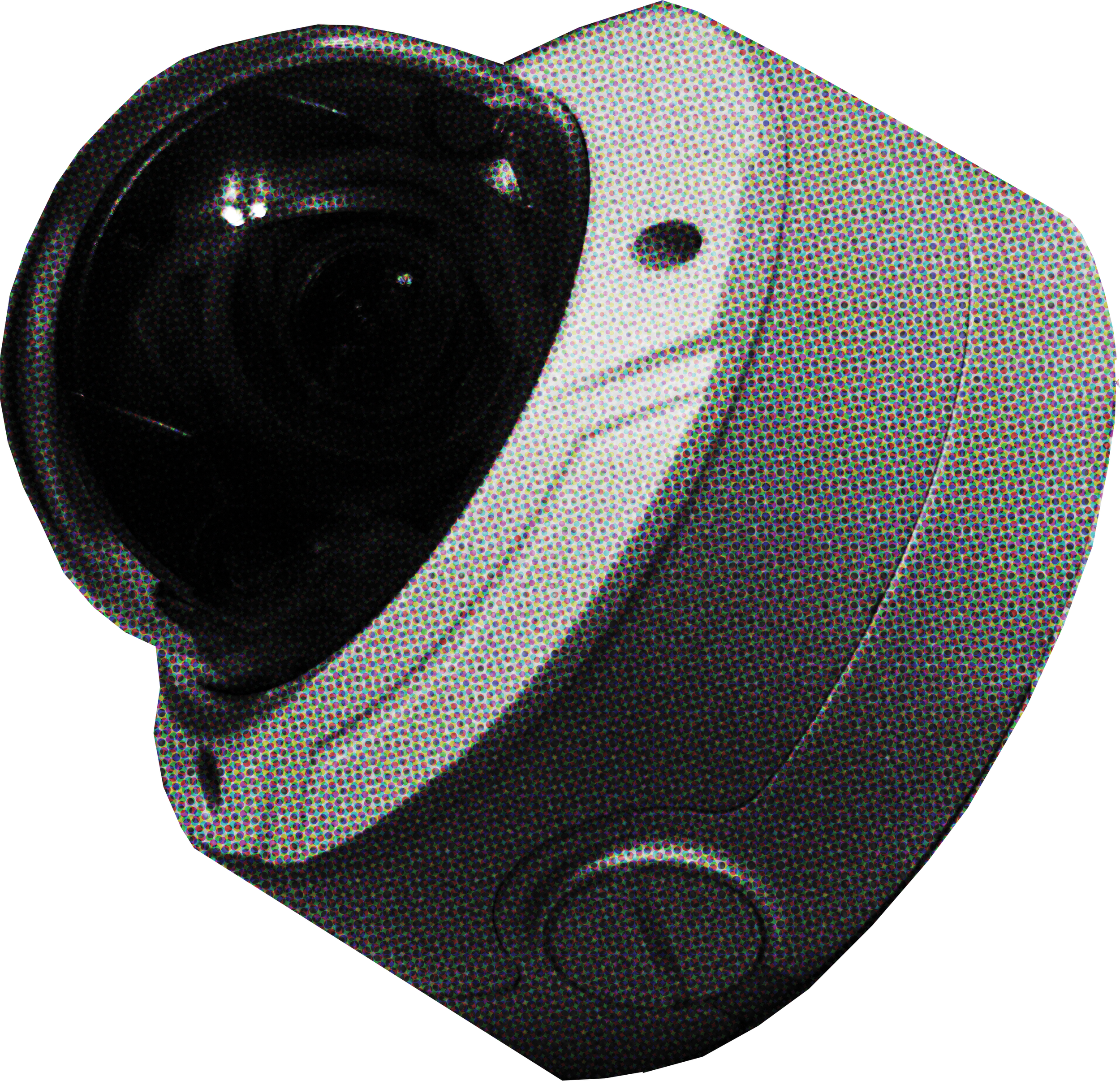
Barefoot says other forms of surveillance include tools that ping cell phone towers to track user locations. Cameras, such as street surveillance or private devices like Ring doorbells, also record footage that can be shared with police.
Given these technologies, Barefoot says students looking to stay politically engaged should weigh their own risks when demonstrating.
“If you’re planning on going to a protest, try and be as nondescript as possible,” she says. “So don’t wear any clothing that has sayings on the T-shirt or anything like that because those can be easier to track down. Cover your tattoos, because again, depending on how unique your tattoo is, that could be used.”
She also recommends turning phones off during protests or using apps that will make devices harder to track through cell phone towers.
As concerns over surveillance continue to loom, some students have expressed frustration with the University’s lack of action in supporting international students during this period of increased tension with federal authorities.
“There’s information that every single student, especially international students, should know about their rights while studying in the United States,” says Jorin Graham, Physics and Astronomy graduate student and lead for the international students working group at NUGW. “These are just the facts that people should know. These aren’t political statements. But Northwestern has been very hesitant to share this sort of information, especially in the most recent months.”
NU provides information for international students through its Responding to Federal Policies website, which communicates federal activity updates and offers University guidance “when appropriate,” University spokesperson Amy Lee writes in an email to nuAZN. She adds that individual schools sometimes share more information than others.
Despite threats of surveillance and the perceived lack of support by the University, many students have still found a sense of community support on campus.
“Other Northwestern students, Northwestern faculty and the community members around Evanston really do want international students here and are really welcoming them,” Graham says. “These unwelcoming policies are really the policies of the federal government, of the University, but that’s not actually reflective of the people they work with and study with.”
The anonymous second-year agrees, saying that despite lack of empathy from some peers and faculty, others have shown genuine care and made him feel more supported on campus.
“A lot of students have made us feel very welcome and have made us feel like we don’t need to speak up,” he says. “They will speak up for us, and we just need to keep ourselves safe for now. That really means a lot, I think, to all of us.”