
Sibling ties
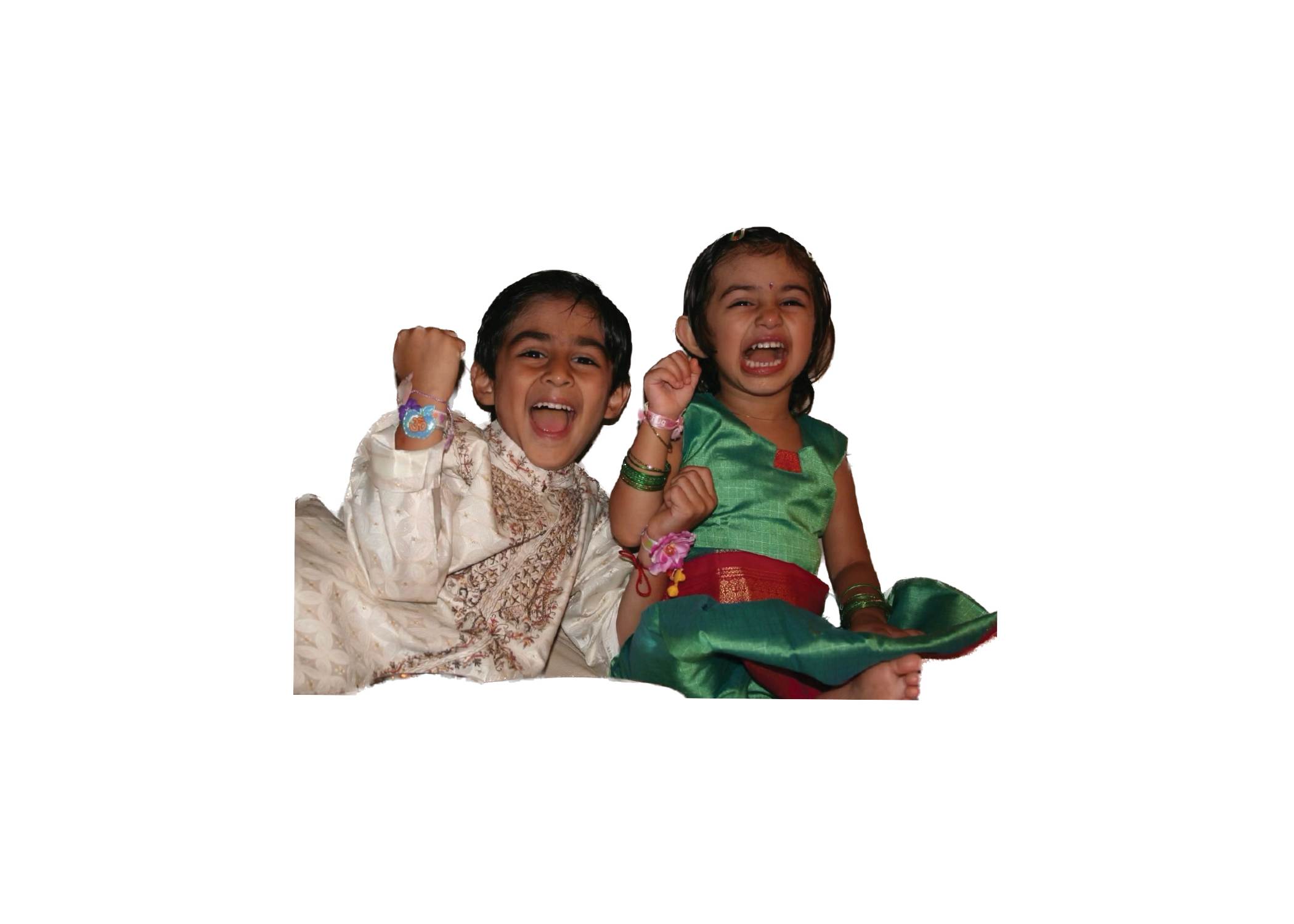
Celebrations of the Hindu holiday Rakhi reflect what it means to be bonded by blood.
by Keya Chadhuri

Communication first-year Shreya Saini has been celebrating Rakhi for as long as she can remember. Her quintessential Rakhi starts with putting on her lehenga. Then, she puts a tikka on her brother Varun’s forehea with her right ring finger and thumb, marking his ajna chakra as a form of protection. She sprinkles rice on his head as a blessing, then ties a rakhi — a threaded amulet, often red and adorned with gold charms and sacred symbols — on Varun’s right wrist. He gives her cash, always amounts ending in the number one to represent seeds for growth and prosperity. Finally, the siblings feed each other sweets, like laddus or kaju katli.
Hindus from northern and western India and Nepal celebrate Rakhi — also known as Raksha Bandhan, Sanskrit for “bond of protection” — on the August full moon. Its origins are attributed to a multitude of myths, most notably the Mahabharata, where Princess Draupadi ties a piece of her saree fabric to treat Lord Krishna’s bleeding finger. Touched by the gesture, he offers her eternal protection and promises to rescue her in times of need. Over time, the torn saree became the rakhi, which the sister ties around her brother’s wrist for protection.
“It’s like [my brother] gets a thread and I get money,” Saini says jokingly.
Over time, Rakhi has adapted to suit evolving generational values, shifting social landscapes and new perceptions of sibling relationships. Many celebrators shift away from the idea of siblings “protecting” each other and emphasize shared love, respect and joy through transformed traditions.
SESP third-year Isha Bhardwaj has a twin sister at Northwestern and an older brother. Despite her close relationship with her siblings, the foundations of Rakhi did not necessarily reflect the true value of their bonds.
“It’s based on the premise that brothers have to ‘protect’ their sisters, which I find a little outdated and untrue,” Bhardwaj says. “Women and girls can defend themselves, and everyone is capable of helping each other.”
Saini shares this sentiment. She used to throw tantrums, she says, because she was jealous that her brother got a “pretty bracelet” and she did not.
Instead, Bhardwaj views Rakhi as a chance to have fun.
“It celebrates sibling bonds by affirming my commitment to having a good relationship with my siblings, celebrating our friendship and getting to spend some time together,” she says.
Anthropology and Asian American studies professor Shalini Shankar says that Rakhi bears a special significance for Indian Americans.
“In the U.S., at least, it seems to be about strengthening sibling bonds in a way that I think I’ve heard various parents express concerns,” she says. “Who will be there for their kids?”
In the U.S., many Indian Americans do not have the large network of an extended family to celebrate Rakhi as they would in India. As such, Rakhi holds a special significance for Indian Americans because it fosters interconnectedness within the immediate family, which provides comfort to immigrant families facing the unknown by offering a partnership of shared experiences, Shankar says. In this respect, Rakhi becomes a symbol of strength.
Rakhi still offers a special day of connection even when extended families cannot celebrate together, like Indian Americans whose relatives live in the subcontinent.
Bhardwaj mails rakhis and handwritten notes to her cousins, who she doesn’t see often. Saini makes the time to call her brother-cousins in India late the night before or early the morning of the holiday to wish them a happy Rakhi. She ties five extra rakhis on her brother every year on her sisters-cousins’ behalf.
“I guess that’s the biggest difference in culture. In India, you consider your cousins like siblings and here there’s like a distinct separation,” Saini says.
There is no word for “cousin” in Hindi — they are the same as sisters and brothers. Rakhi helps legitimize that bond, Shankar says.
“I think that it adds validity to that way that many Indians don’t just say cousin, they’ll say ‘cousin-brother’ or ‘cousin-sister,’ because, in a way, that’s the relationship they’re fostering,” Shankar says.
Rakhi is also one of the easier Indian holidays to celebrate, Saini says, because it is relatively low maintenance. It doesn’t involve the colorful chaos of Holi or the decoration and worship of Diwali. Families also don’t have to celebrate it in one specific way.
“There’s been a lot of room for variation over the years,” she says. “Sometimes there are no Indian sweets and we’ll just feed each other Starbursts, sometimes we’ll just be in normal, everyday clothes.”
Rakhi is not reliant on its specific practices but on values of love and affection. It acknowledges a bond that is rarely attended to — taking the time to convey love to romantic partners and parents is frequent and expected, but sibling ties can often go unappreciated and unacknowledged.
“I feel like just in general, in the U.S., there’s not as much emphasis on sibling relationships,” Saini says. “But there’s appreciation for parents and even grandparents.”
Saini turns to her brother for everything, she says. She sees tying the rakhi as an act rooted in protection, care and her love for him. Even though she feels this every day, Rakhi is an opportunity to verbalize appreciation and be conscious of those, fostered relationships that escape recognition, Saini says.
“[Varun’s] been able to help me so much with things, academically, or just life experiences, and I’m never able to give back,” she says. “And it’s not like he’s ever asking for anything, but it’s just like to me, it means a lot to be able to say ‘Hey, I appreciate you. Thank you for everything you do.’”
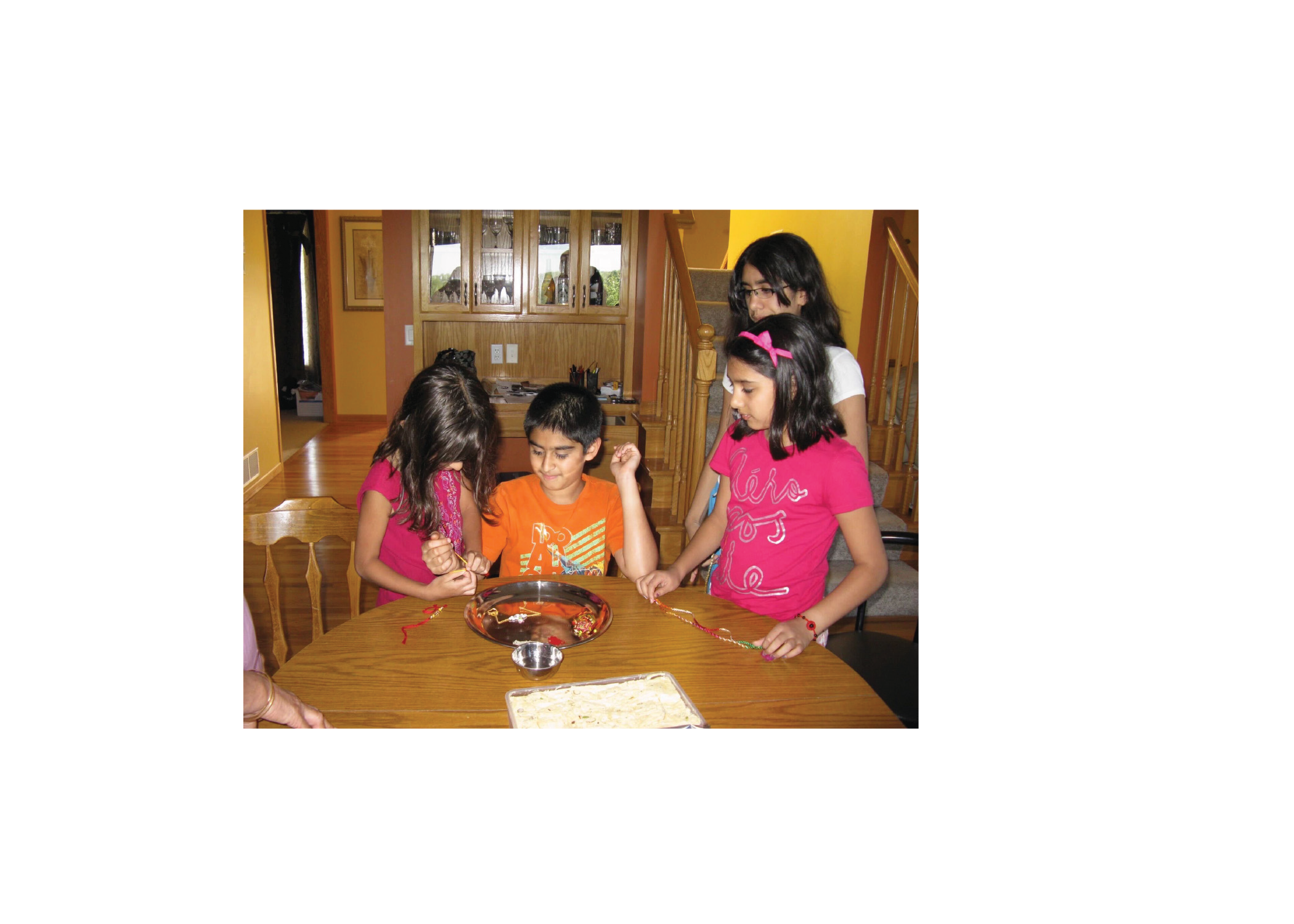
PHOTO COURTESY SHREYA SAINI