할머니, 보고 싶어요.
Halmeoni, bogo sipeoyo
PHOTO COURTESY OF CATE BIKALESReflections on life, death and grief.
by Cate Bikales
My heart aches. Part of me wants to close my laptop and shut myself off from the world because writing things down has a way of making them feel irreversibly real. But the reality is already here — I would rather use this space to process the weight of this loss than let it linger.
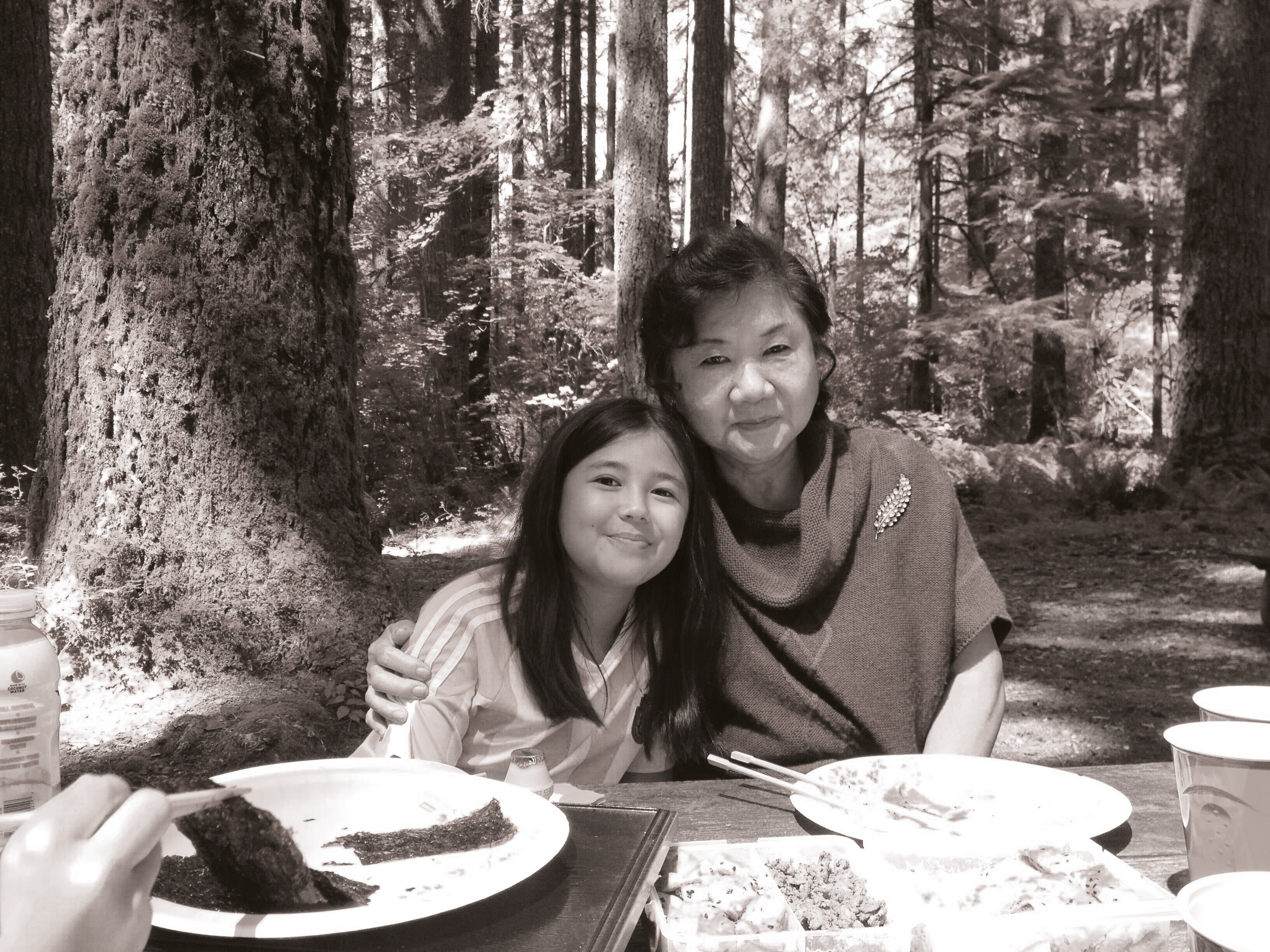
Two years ago, I wrote a piece for nuAZN 31: SERENADE reflecting on my connection to my grandmother and my fears of her passing. I wrote of her worsening dementia, and how this cruel disease steals away a lifetime of memories, leaving a trail of grief in its wake. I wrote of my grandmother’s kind heart and her generous spirit. “Even when she is gone, I will remember her smile. I will remember the way she laughed with me, the way she cried with me, the way she brightened my day,” I wrote.
Today, those words carry a weight I didn’t understand then.
My grandmother — Maya, as I always called her — passed away on Nov. 16, 2025, after a long battle with dementia. I sat by her side during her final week, watching her body refuse to surrender its grip without a fight. I held her cold hands as she took her last breath.
This is a collection of reflections from those final seven days, written to you, Maya.
삶 (Life)
“Maya has a fever of 104. Not clear what is going on. She probably has pneumonia.”
That was the text Mom sent me when she first told me you were nearing the end. She begged me not to come home. She told me you would want me to keep living my life — that you wouldn’t want me to see the state you were in. But I wasn’t just coming home for you. I was coming home for myself. To get the chance to say goodbye to my best friend.
I always knew that someday this time would come, and part of me thought it would be easier to accept, since I had been watching the real you slip away for years. But the “long goodbye” is a cruel paradox: you think you’re coming to terms with the loss, but when the end finally comes, it breaks your heart all over again.
Nothing could have prepared me for the moment I walked into your hospital room. You looked sickly like I had never seen before, your breathing labored and your face slick with sweat. You were already unconscious.
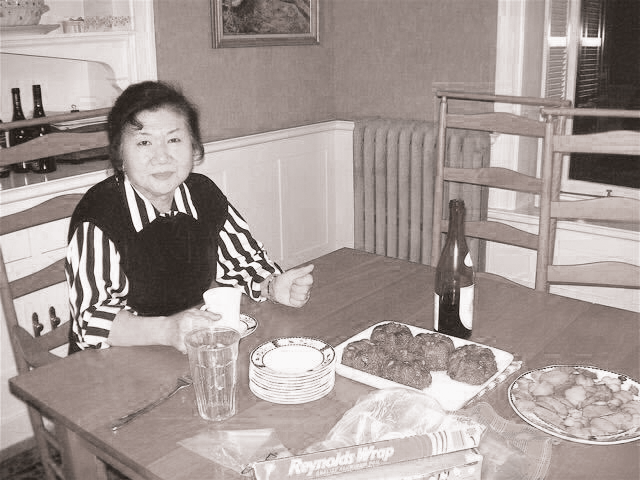
I spent the hours trying to memorize your face: every crease, wrinkle and smile line. I thought about the 떡 (tteok) and the 김밥 (gimbap) you used to feed me — your handmade gifts of love. I thought of the hours we used to spend playing silly games together: Uno, Yamslam, Crazy Eights. I don’t think you ever really understood the rules, but you played with me anyway. That sums you up well: you didn’t need to understand everything to show up, and you didn’t need to win to stay. Your love for those around you was endless.
It hurts that I can’t even recall the last words I said to you. Our communication had already become a series of half-finished sentences and gentle nods. There were days when you didn’t remember who I was, yet still, we remained present together. Now, you feel eons away. I find myself trying to pinpoint the last time your voice sounded like yours and your eyes held that unmistakable, loving spark I so fondly remember. I’m haunted by the idea that I let our final, “real” conversations pass by.
I hope you knew how much you meant to me. I hope you knew how much I cared for you and how deeply you touched my life. I have to believe that the love we shared was too bright to be extinguished by a lack of parting words and that even in the fog of the “long goodbye,” you felt the warmth of my presence as clearly as I felt the light of yours.
죽음 (Life)
“Anyone … who describes dying as ‘slipping away’ or ‘peaceful’ has never witnessed it happen. Death is violent, death is a struggle. The body clings to life, as ivy to a wall, and will not easily let go, will not surrender its grip without a fight.”
While sitting by your bedside, I happened to read those words from Hamnet. Our language around death is so sanitized. We use gentle phrases to comfort the living, but fail to describe the raw reality of death.
The Sunday you left us, your whole body rattled. Pauses became longer between each breath. Brown liquid dripped from your mouth — buildup from your weakened lungs that couldn’t clear them. The sound filled the room, wet and harsh, louder than even my thoughts. It was painful to hear and watch, knowing there was nothing left to fix.
And then, all of a sudden, silence. I’ve never seen death so close up.
I heard Mom say she felt relieved, that she was glad you were finally at peace. Yet, I felt a strange sense of emptiness. I heard myself asking my family to leave, to give me a minute to say goodbye one last time.
Tears streamed down my cheeks, blurring everything until the room softened at the edges. My voice broke around the syllables, unfamiliar yet sacred all at once: “할머니, 사랑해요” (halmeoni, saranghaeyo). Grandmother, I love you.
I don’t know if you heard me, but I said it anyway. I needed the air to carry it, needed you to be loved out loud one more time. I pressed the words into the silence you left behind, hoping — maybe foolishly — that love moves differently than breath, that it lingers even after everything else has gone quiet.
애도 (Grief)
할머니, 보고 싶어요 (halmeoni, bogo sipeoyo). Grandmother, I miss you.
Grief has a way of slipping into the quiet moments, the ones I never thought to prepare for. I celebrated my first Christmas without you. The lights felt dimmer, the laughter thinner, the empty chair bigger. Then came my first birthday without you — another marker of time moving forward.
Some days, the loss feels heavy and sharp. Other days, it settles into a dull but constant ache. It’s always there.
I often worry that I’m losing my memories of you, that they’re clouded by our last week together. I fear I’ll forget the light in your eyes, the kindness in your face. But I’m holding it close. I hold onto the love we shared. And in doing so, I am learning resilience — not the kind that erases pain, but the kind that makes space for it while still choosing to go on. I know that’s what you’d want me to do.
My heart still aches for your presence. There are moments I want nothing more than to hear your laugh and to feel your hand in mine. But I am learning, slowly, to find peace in your absence—to understand that love doesn’t end, it only changes its shape. It grows larger with each day that passes. And in that understanding, I carry you with me, always.
PHOTO COURTESY OF CATE BIKALES