
No place(s) like home


Torn between two locations, international students consider what they have – or will – leave behind.
by Anna Zheng
PHOTO COURTESY OF ALI MOHAMMADMcCormick second-year Ali Mohammad remembers his home, Latakia, Syria, fondly. Ranging in age from 1 to 80, his extended family of aunts, uncles, siblings and cousins would take weekend trips to the nearby snow-capped Coastal Mountain Range. They would party late into the night, dancing to a jumble of folk music and laughter.
The streets of home were full of familiar sights and sounds: grandpas yelling from balconies, uncles drinking tea outside and cheekily sharing gossip. Mohammad says he never realized how much he would miss walking past these scenes until he moved to the United States for college.
“It’s very important for me to feel this sense of familiarity with where I live,” Mohammad says. “The memories, they really make you connected to the place.”
Some international students at NU are making an impossible choice: return to their home countries after college or stay in the United States. Beyond the typical considerations of safety and job security that pull people to new countries, the real weight lies in the communities, friends, places and opportunities they leave behind.
Missing: familiarity
Mohammad says he is considering going to Europe to pursue a Master’s degree in architecture after he graduates from NU, but being away from home for his undergrad has already been difficult.
Aside from missing the familiarity of family and food — savory shawarma dipped in fragrant garlic sauce — Mohammad says he longs for the parts of Syria he used to hate, like walking 20 minutes on a highway-side route to get to high school every day.
“I used to despise it because it was so long and loud,” he says. “But now I miss it so much.”
As much as Mohammad misses his home country, Evanston and Chicago have become familiar to him after a year and a half at NU. Last summer, Mohammad and his friend would spend most nights walking around Evanston and getting to know the streets “by heart.”
Now, the idea of moving to Europe post-graduation means leaving behind another home. One of the things he says he will miss most is the cross-campus walk he takes down Orrington Avenue, where the quiet rainbow of two-story houses reminds him of the picturesque U.S. suburbia he saw in the Home Alone movies growing up.
“There isn’t a specific thing I love about them,” Mohammad says. “They’re just beautiful places to be, as simple as that is.”
Missing: holidays
Cultural holidays can be especially hard for international students who cannot celebrate with their communities as they usually would.
For SESP third-year Tok Lin Yeo, who graduates this spring, moving back to Singapore means getting to celebrate Chinese New Year “properly” with his family for the first time in years.
In the United States, Yeo spends the Chinese New Year by getting dinner with friends. But in Singapore, over the course of 15 days, the Singaporean Chinese community hosts large dinners on the holiday’s eve and reunites with friends and family members they would not see otherwise.
Yeo says he used to travel to see his maternal grandparents and family members in Malaysia, but it’s been nearly four years since he has celebrated the Chinese New Year with his entire family. This distance contributes to a feeling of discomfort from both personal disappointment and social pressure to be a good son.
“It doesn’t feel good to disappoint people when the rest of my family shows up, and they’re like, ‘Oh, where’s your son?’ and I’m not there again,” Yeo says.
When he does go back to Singapore for the summer, Yeo feels a sense of distance from his high school friends. Attending college in the United States means that their experiences don’t line up anymore, a stark contrast to the first 20 years of his life.
“It’s nice, but there’s a bit of disconnect with what’s going on back home,” Yeo says.
Missing: cultural norms and nature
Differences in customs can create cultural shocks that make moving to a new place overwhelming.
Josuke Takashima, a Weinberg second-year from Osaka, Japan, says his first month at NU was difficult because of his unfamiliarity with everyday life in the U.S.
Behaviors like wearing outside shoes inside dorm rooms and talking loudly on the “L” are at odds with his Japanese culture, Takashima says. Where he’s from, people always take their shoes off before entering a home and stay quiet on public transportation. Placing your elbows on the dinner table or not finishing all your food can also be seen as disrespectful in Japan, but practices like these are common in the United States, he says.
These differences may seem small, but they all add up in a new environment. Takashima says that even after over a year, it is hard to reconcile the cultural differences between the U.S. and his home country.
“You cannot change how you grew up,” Takashima says. “I’m not saying one is better, but it’s completely different for me. I just feel comfortable with Japanese culture.”
Something else he misses is the nature he experienced near his house in Minoh City and at school in Kobe, Japan. Takashima says he lived so close to Mount Minoh and Mount Rokko, he could often feel the wind from the mountain ranges blowing over him when he played soccer outside with his friends.
Nature helps him feel at peace, he says. Luckily, the view of Lake Michigan at NU provides an element of nature that he is used to.
Missing: freedom
As he prepares to go back to Singapore, Yeo says returning home means giving up the freedom to try a world of new things in the United States, like exploring the culturally diverse neighborhoods of Chicago or going to music concerts.
Yeo says that he feels artists rarely set tour dates in Singapore, so he doesn’t have many chances to see these shows at home. In his two-and-a-half years in Evanston, he attended his first concerts, capitalizing on the proximity to Chicago to see Kendrick Lamar, Anderson .Paak, SZA, Lorde, and Laufey perform.
“I thought it was crazy … surreal to be in the same space as them,” Yeo says.
The thrill of living in a big city resonates with Mohammad, who says that he even enjoys the cold Chicago winters because the city looks so beautiful when it snows. Mohammad says he considers Chicago his favorite city in the world. Being there, he feels inspired to “try everything, experience every culture.”
At NU, he has found both a sense of home and opportunities to learn about different cultures through the Middle Eastern North African Student Association (MENA). At last spring’s Taste of MENA event, he was able to try Macarona Béchamel — an Egyptian-style spaghetti dish — and Iranian candies. Mohammad also shared a drink: mate, a caffeinated herbal beverage brought to Syria by Argentinian immigrants.
Though he would prefer to be home with his family, Yeo says he’ll miss the freedom he has living in the United States.
“It’s the struggle between familiarity and excitement,” he says. “It’s exciting because you’re independent. You get to do things that are spontaneous.”
Yeo added that this independence allows him to do things without worrying about what others think of him.
That feeling of freedom resonates with Takashima, who says he will miss Americans’ friendliness and openness to express their opinions, as someone who considers himself more social than most Japanese people. The way people greet their friends with handshakes or hugs and speak out about politics are two things he loves about U.S. culture.
Most people in Japan do not speak candidly about controversial topics like politics for fear of career consequences, Takashima says. However, self-expression is important to him, as it helps him connect with his friends.
“I feel a lot closer to them,” he says. “I want to talk about random stuff, but also about what they want to achieve, what their vision for the future is.”
Found: comfort in community
Moving to a new country can feel incredibly isolating, but some students find comfort in their on-campus communities. Though MENA cultures are many and diverse, knowing that the people around him have somewhat similar cultural backgrounds and want to celebrate them together brings Mohammad joy.
“Support systems that make you happy are just as important as support systems for when you are upset,” he says.
Despite these support systems, being so far from home can still be difficult.
“I have a great community, but still, sometimes I just go back to my room and my family’s not there, so I just get a little bit emotional,” Mohammad says.
When the distance from his family makes him upset, Mohammad thinks about his support systems and reminds himself that he gets to attend his dream school, which motivates him to keep trying.
Mohammad says his upbringing in Syria, where he experienced war, earthquakes and economic troubles, shaped how he deals with loneliness at NU.
“Choosing to focus on that and choosing to maintain that positive look can make life be a little bit less excruciating when things get hard,” Mohammad says.
Takashima says he acclimated to life in the U.S. so quickly because of the friends he made during International Wildcat Welcome and through sports. At NU, he enjoys playing soccer, basketball, pool, tennis, ping pong and intramural field hockey and futsal.
Team sports, to him, are about building community.
“To win as a team, we have to bond strongly,” Takashima says. “If we have a good connection outside soccer, I believe we can have a good connection on the field as well.”
Takashima says it was easy to get used to eating at the dining halls, but that he still misses Japanese soul food like sushi, takoyaki and oyakodon (a chicken and egg rice bowl that translates to “parent-and-child”). Takashima makes his own Japanese-style breakfasts to get a taste of his home country each morning. He prepares rice every night so it is always ready to enjoy in the morning for him and his suitemate, who is also Japanese.
Takashima is still deciding whether he wants to stay in the United States or return to Japan after graduation. However, the idea of going home excites him, as it would allow him to reunite with his Japanese culture while simultaneously having the freedom to pursue future career options.
For Yeo, his move means returning to what he knows.
“It’s a lot more comfortable in the sense that there are always people that you can count on,” Yeo says. “It’s a big feeling, going home.”
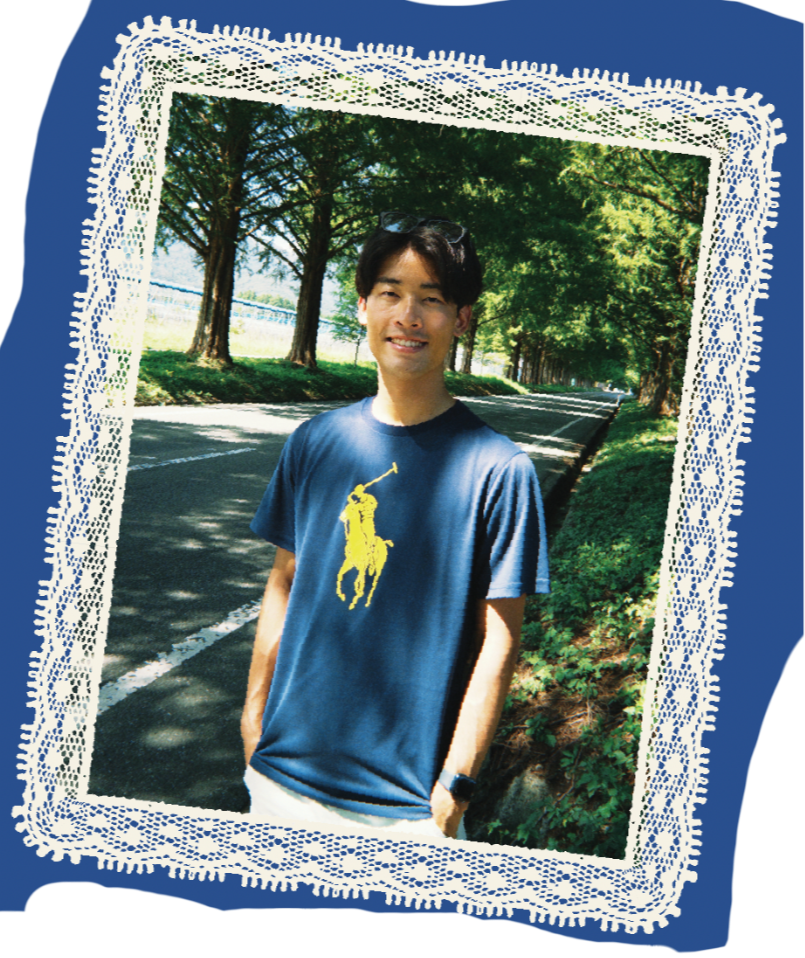
PHOTO COURTESY OF JOSUKE TAKASHIMA