

(Not) made for us
Asian students struggle to find products that fit their mold.
by Sarah Park



My glasses fall down my nose at the worst times. Like when the wind blows my hair into my lip gloss and I’m overheating in my coat, or when my bag keeps slipping off my shoulder and I can’t see through my fogged-up lenses, my sliding glasses are always the final straw.
Because the structure of most mainstream glasses cannot accommodate my lower nose bridge, they never stay in place.
The founders of an inclusive eyewear brand called COVRY, Athina Wang and Florence Shin, had the same problem. They made it their mission to offer eyewear that was not only comfortable but stylish.
“When I was seven, I went into the optometry store and was hoping to find [glasses] that would fit me comfortably and none of them did,” Shin told The TODAY Show. “I felt like, ‘Was something wrong with my face?’ That’s what really inspires us at COVRY because we don’t want anyone to feel that way.”
And they’ve succeeded. From being featured on magazines like ELLE and Vogue to opening up their first flagship store in California, Wang and Shin have been changing the eyewear industry.
But the problem doesn’t end at glasses. Students struggle to find products that accommodate Asian features, like makeup that doesn’t match their skin tone, shoes without flat foot protection and eyelash curlers that do not properly curl their lashes.
Weinberg first-year Uma Yaga grew up wearing makeup that didn’t quite match her skin tone. Her mother struggled to find Western products that worked for her and told Yaga that was just “the way it was.”
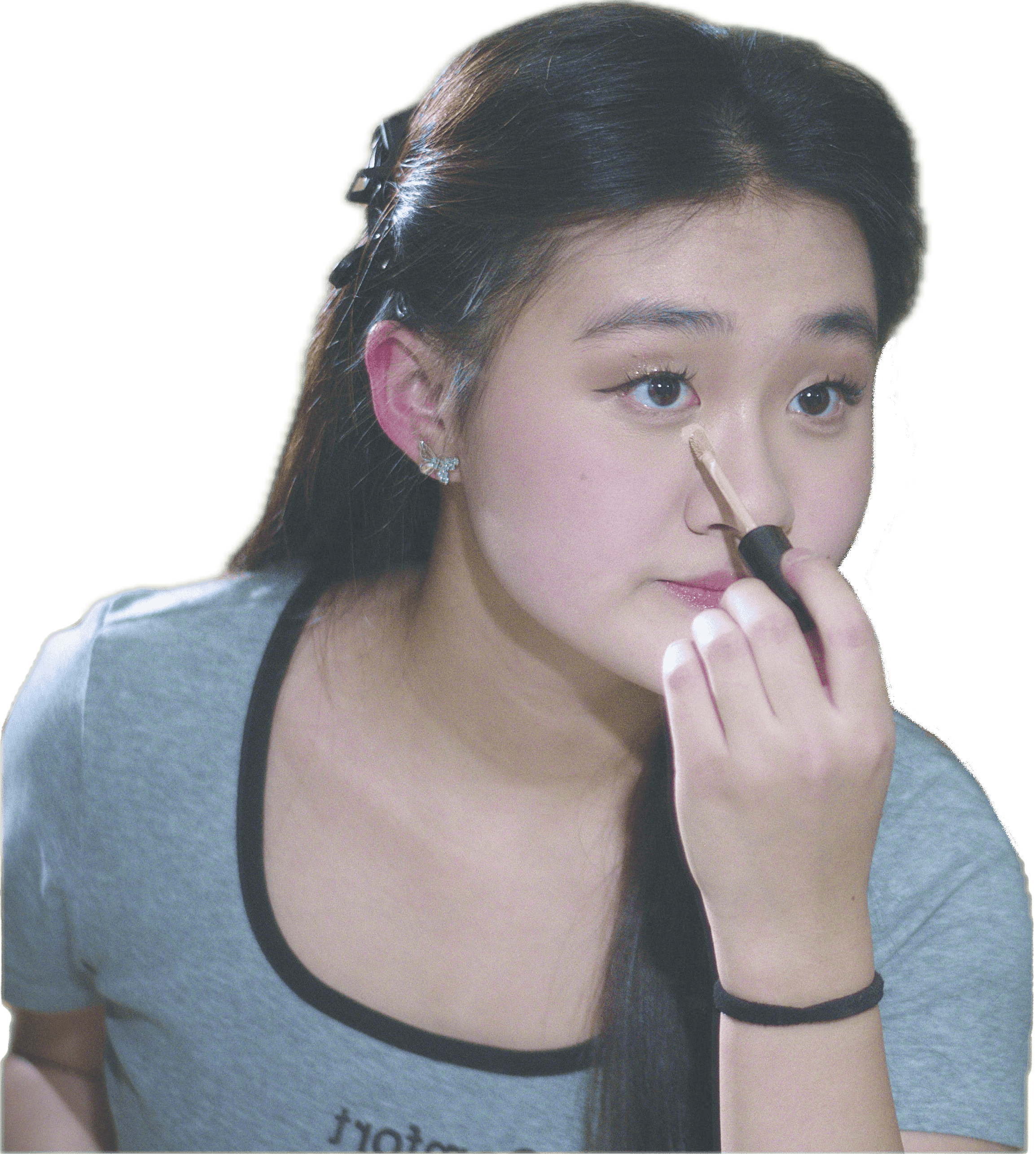
As Yaga experimented with makeup products by herself, she encountered problems that her mother and many other South Asians faced: blushes that had a white cast, foundation that did not fit her undertone and concealers that were too light for dark circles and hyperpigmentation, something that can be more visible on people with darker skin tones.
“I remember swatching Tower 28 [concealers], and it just sheened over my skin,” Yaga says. “For me, you could still see the purple underneath. It made me look like I got punched in the face.”
When Medill first-year Claire Chen lost her eyelash curler from Japanese brand Shiseido, she tried to use her roommate’s curler from CoverGirl, a U.S. cosmetics brand. The Shiseido curler has a flatter curve to the wand, making it easier for people with different eye shapes to curl the corners of their lashes. CoverGirl lacked this feature, and Chen found it difficult to do her makeup.
A 2006 study in the British Journal of Dermatology found that the lashes of Korean women were straighter and more downturned than the lashes of people of European descent. Chen says the formula of Western mascaras usually weighs her lashes down too much.
After scouring TikTok, Chen finally found her answer: KissMe’s Heroine Make, a Japanese mascara known for lifting stubborn lashes with their lightweight formula.
But when Chen runs out of her mascara, she isn’t able to just visit her nearest Sephora like her friends; instead, she has to rely on Amazon to access Heroine Make. Growing up in Minnesota, Chen says she did not have access to Asian stores with products marketed towards her features.
Makeup advertising often overlooks how differently products perform for different people. As a result, some consumers are surprised when products do not work as promised. For many, learning that not all makeup works for them was a process, not a known fact.
Chen went through endless tubes of Western mascara before she realized it was not doing anything for her lashes.
“When products that are supposedly accessible don’t work on you, it feels constraining,” Chen says. “You have to do research to figure out which Asian product is right for you. It’s not like you can just go to the store and pick one.”
Weinberg first-year Sean Hong took it upon himself to find products that were right for him, specifically shoes that fit his flat feet. Flat feet are a common characteristic among East Asians and can lead to fatigue and pain while walking, according to a 2022 study in the National Library of Medicine.
While researching online, Hong came across VELHO shoes, a type of barefoot shoe that encourage toes to naturally splay out. He found that mainstream shoes restricted that movement and provided little support for flat feet, so he began wearing VELHO.
“I’ve heard even flat-footed people develop a bit of an arch when [their] toes are allowed to do what they’re naturally supposed to do,” Hong says.
Also turning to the internet, Yaga discovered products that worked for her. On Instagram, she sourced new recommendations from South Asian influencers.
Her search brought her to Kulfi Beauty, a makeup brand catering to South Asian consumers. Their concealer has shades with purple undertones, finally giving her the color-correcting abilities she had been looking for.
Priyanka Ganjoo founded Kulfi Beauty with just that goal in mind. She didn’t just want people to see familiar concealer shades — she also wanted to bring that sense of comfort to her brand name, with kulfi being a common South Asian ice cream dessert.
“I just felt like [makeup] was for a certain aesthetic or a certain type of girl that wasn’t me,” Ganjoo told Refinery29 in a Q&A. “So I decided to do it myself.”
Although Yaga says there is a long way to go until full inclusivity, she is relieved to see there are resources leading people to products made for them.
Yaga is now that resource for her mother. Although she cannot change her mother’s experiences with makeup, she is actively trying to change the future.
“When I got older, I actually ended up teaching my mom, ‘No, there’s ways that we can make [makeup] look good for us, and we don’t need to just use whatever’s out there,’” Yaga says. “Brown girls, we buy makeup too.”