
Syncopated beats
Finding cadence through cultural music.
by Summer Hu
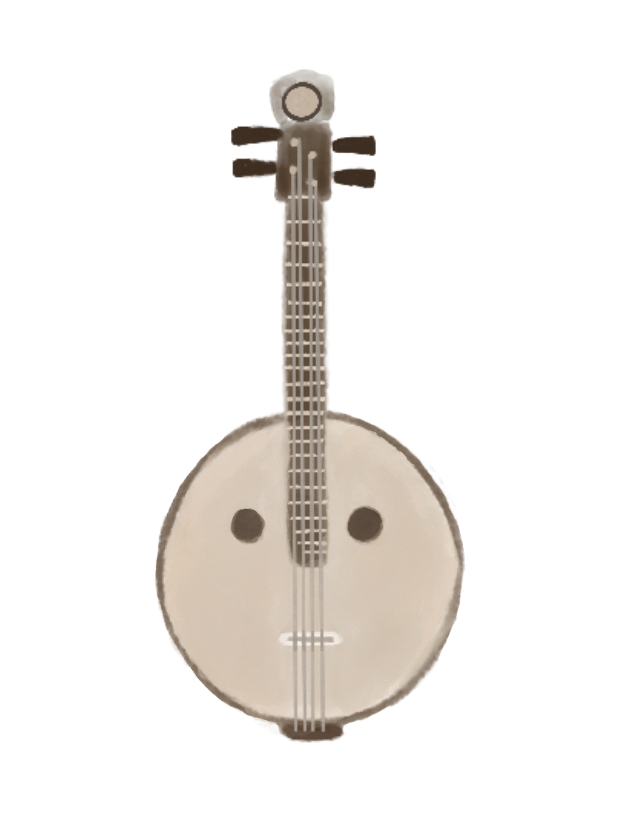
For some students, music comes from the soul. For McCormick and Communication second-year Violet Liu, music also comes from her heritage — a lifeline to her Taiwanese culture.
Vibrant with bands and orchestral ensembles, NU’s music scene thrives through student innovation and diversity. But for Liu and several other students, a special niche within the music scene combines groove and cultural connection: traditional forms of Asian music.
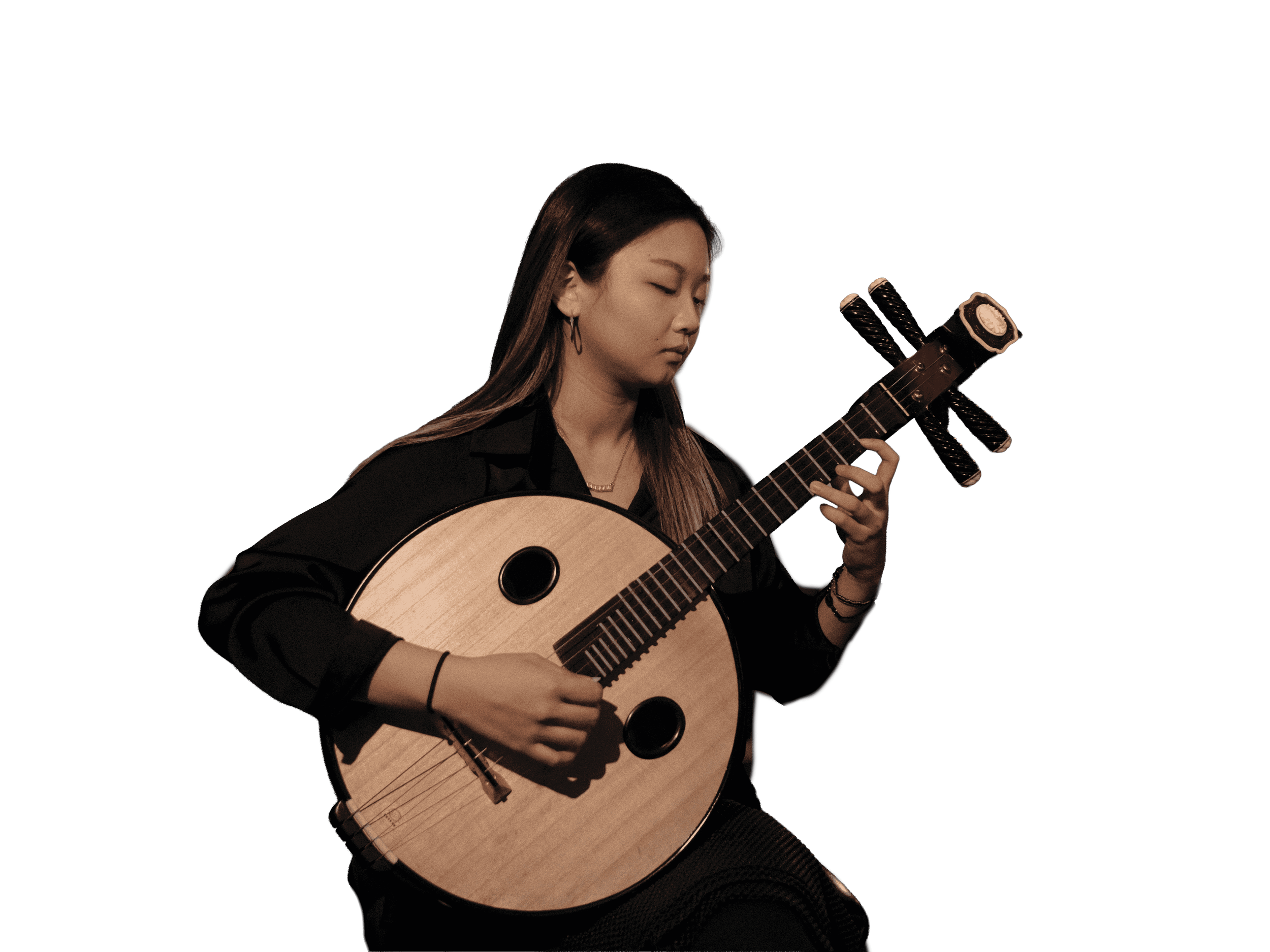
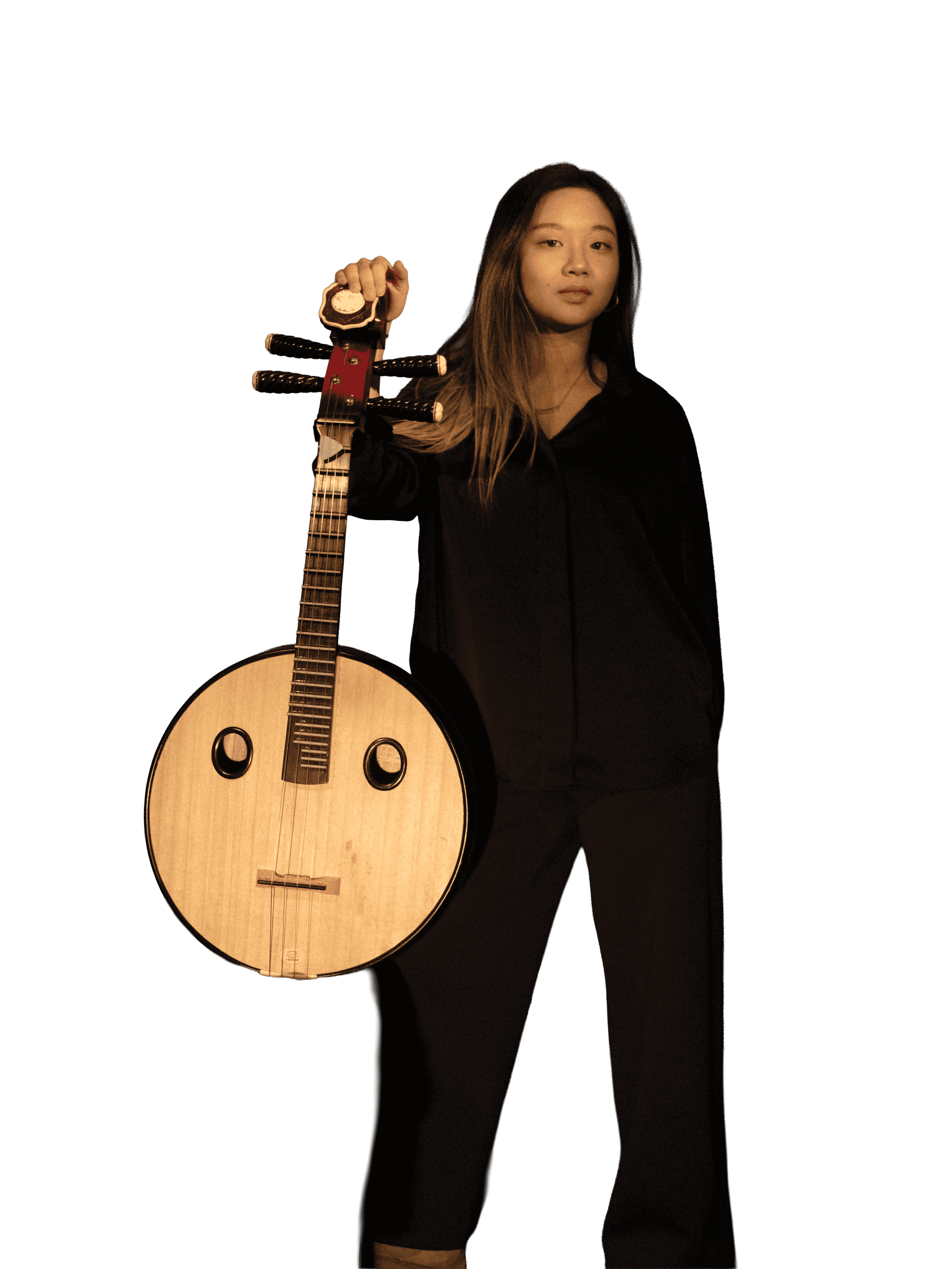
As she pulled out her zhongruan — a four-string traditional Chinese plucked instrument — Liu inhaled the woody scent.
“I think it smells like home,” Liu says.
Originally from Taiwan, Liu began playing her instrument in third grade and has been playing for 12 years. She started with the liuqin, and throughout her early school years, experimented with the pipa and piano. Today, Liu calls her zhongruan her “big daughter” and her pipa the “second daughter.”
Noting the fast-paced environment of NU, Liu says that she sometimes feels lonely and can lose her sense of self. However, the zhongruan brings her back, a reminder of memories from her youth and school days in the motherland.
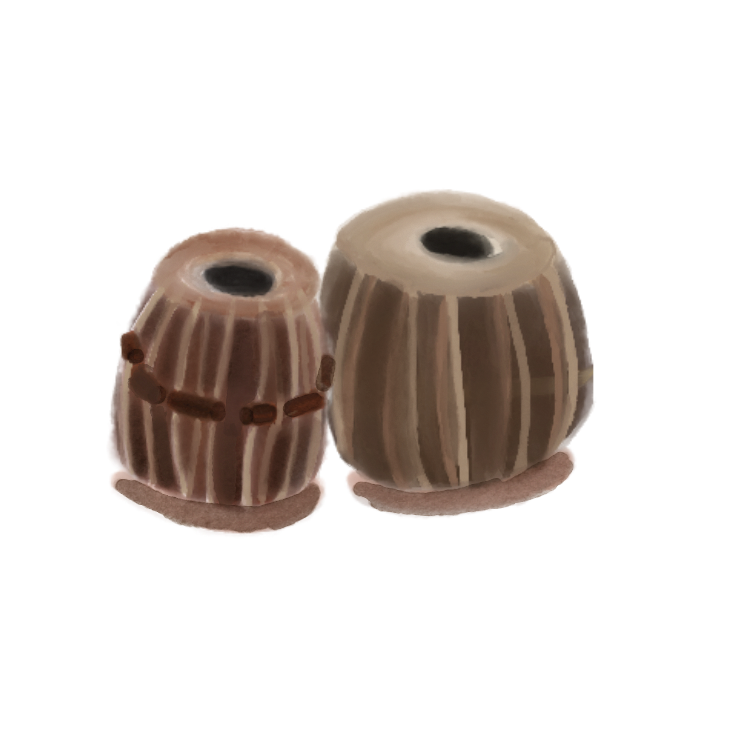
The tabla, a set of two hand drums, also carves a pathway for Medill second-year Isabella Jacob to reconnect with her Indian culture.
Growing up in Ann Arbor, Michigan, there wasn’t much South Asian representation, and it was not a priority to pass on Malayalam, her family’s native language, at home, Jacob says. Without language, she turned to the tabla for a connection to her Indian heritage.
“I also think that in some of the ways that I can’t express my culture — like I can’t fluently speak my language — I’ve made up for it in knowing how to play this instrument,” Jacob says.
A family trip to India further demonstrated the significance of the tabla to Jacob. When her family visited a tabla shop, Jacob started playing, which prompted the owner to ask if she was from Delhi. To her, that was an “affirmation of her skills.”
However, unlike Liu, who was able to bring her instrument to NU, Jacob was unable to bring the tabla to college. The sheer size and weight of the instrument made it unfit for a dorm. As a result, Jacob says, she isn’t able to play as much now.
But despite the time away from her instrument, she still finds herself drumming her fingers on her thigh or other surfaces, Jacob says.
Others say they have been affected more emotionally by the separation.
Weinberg first-year Aileen Yang also plays the zhongruan, a relationship cultivated for over 10 years. Because of its size, she was unable to bring it with her from Hong Kong.
“I left a piece of me back home,” Yang says.
When she went back to Hong Kong for winter break, Yang noticed her skills had become rusty.
To reconnect with her instrument, especially away from home, Yang says she turns back to comfort songs, such as “Moonlight” by Liu Xing, and watches old videos of herself playing. She says the song gives her the ability to express her emotions.
Additionally, she recalls the strong cultural bonds she experienced while playing her zhongruan during a community open day performance at her international high school in Hong Kong.
“I felt really connected to my roots when the local people came over and listened to me play,” she says.
For Yang, the zhongruan’s familiar and gentle sound is an extension of her personality.
Despite adversity, she’s stuck with the instrument for many years.
Some of Yang’s earliest memories of playing the zhongruan were of the physical pain. The force required to press the strings often hurt her fingers when practicing. She remembers especially abhorring the bar chord, which is when a musician plays the same fret on all four of the zhongruan’s strings, Yang says.
“There were definitely times where I felt that I wasn’t physically strong enough to play the techniques they needed,” Yang says.
Despite this, Yang appreciates the way that she can communicate through the instrument.
“I’m not just using it as a physical tool,” Yang says. “I also want me, or whoever’s listening to me playing, to know how the composer is feeling and also how I want to express my own thoughts and opinions through playing this piece.”
Meanwhile, for Jacob, playing the tabla is a meditation.
Describing the tabla’s sound like “waves lapping up against a rock” (a saying that she got from her tabla guru or teacher), Jacob says the instrument requires focus and a certain amount of hand strength.
“I think it taught me a lot about shutting the world out and being one with yourself,” Jacob says. “And I think that is what I probably missed the most.”
Despite the deep relationships students cultivated with traditional music and their instruments, NU still lacks a coherent Asian traditional music scene — a challenge some students have struggled with.
When Liu was a first-year, she attempted unsuccessfully to reach out to others who played traditional Asian instruments. She noted that she hasn’t been able to connect with anyone else on campus who played the zhongruan.
Jacob, too, sought a tabla community in Evanston. However, she was unable to reach the meeting location because she doesn’t have a car.
Although it appears slightly outdated to be playing traditional instruments in a rapidly-modernizing world fraught with AI-generated music, students observed that the two art forms aren’t necessarily separate.
Liu says she was aware that AI could recognize patterns and create pop music, but replication would be difficult for traditional music.
“You can definitely extract the sound of it,” Liu says, “but I feel, creation-wise, you’re probably gonna be really hard.”
However, others embraced the modernization of traditional music. Noting the presence of people playing electric zhongruan on social media, Yang says it’s interesting how people use amps and play pop music on traditional instruments.
“It is a traditional music instrument, but it doesn’t only need to stay in the past,” Yang says. “You can continue on the legacy and redefine it.”